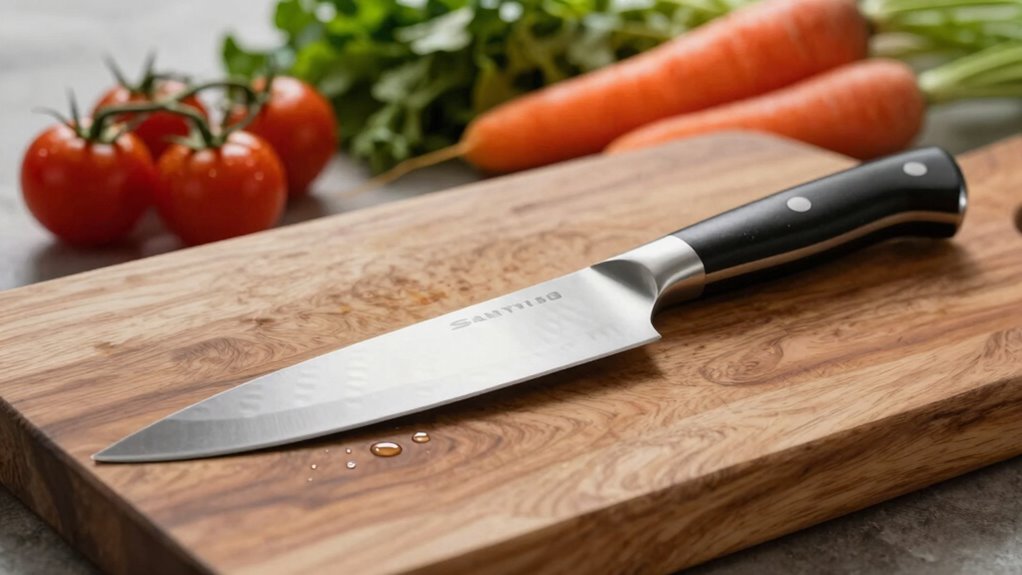

A santoku knife is popular because it combines versatility with beautiful craftsmanship, making it ideal for slicing, dicing, and mincing all in one tool. Its wide blade helps you scoop ingredients easily, while the straighter edge offers precise cuts on vegetables, meats, and herbs. Made with high-quality layered steels, it guarantees durability and sharpness over time. If you want to discover what sets it apart and how it enhances your kitchen, keep exploring its unique features.

Get kitchen staples and gadgets delivered free with Prime
- Fast, free delivery on millions of items
- Prime Video, Amazon Music and more included
- Member-only deals all year
Key Takeaways
- Its versatile design combines slicing, dicing, and mincing in a single, efficient tool.
- The sharp, durable blade allows for precise cuts on various ingredients.
- Its sleek, modern appearance reflects traditional Japanese craftsmanship and enhances kitchen aesthetics.
- Crafted with layered steels for strength, longevity, and corrosion resistance.
- Suitable for both professional chefs and home cooks, offering practical value and cultural heritage.
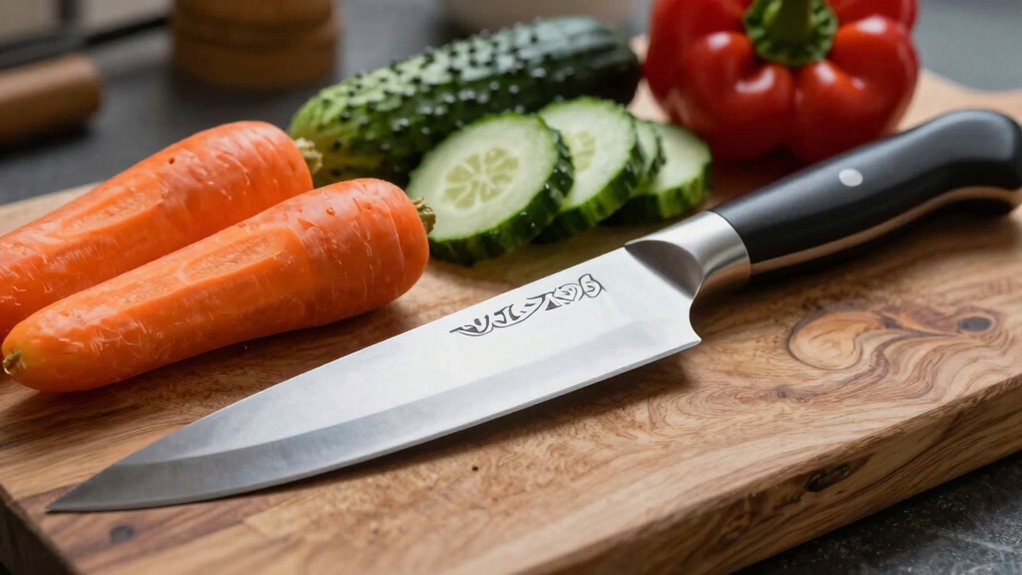
Santoku knives have gained widespread popularity in recent years, thanks to their versatility and sleek design. When you look at a Santoku, you’re seeing a perfect blend of traditional Japanese craftsmanship and modern functionality. These knives are crafted with precision, often featuring high-quality materials that showcase the artistry and attention to detail that define Japanese craftsmanship. This heritage adds an element of authenticity and durability that appeals to both professional chefs and home cooks alike. The design of a Santoku isn’t just about looks; it’s about creating a tool that can handle a variety of tasks effortlessly, making it a staple in many kitchens.
Santoku knives blend Japanese craftsmanship with modern design for versatile, durable kitchen tools.
One of the biggest reasons the Santoku knife is so popular is its exceptional kitchen versatility. Unlike single-purpose knives, the Santoku combines slicing, dicing, and mincing into one efficient tool. Its wide blade allows you to scoop ingredients easily, reducing the need to switch tools and streamlining your cooking process. The blade’s edge is typically straighter than a traditional chef’s knife, which means you can make precise cuts with less effort. Whether you’re preparing vegetables, slicing meat, or chopping herbs, the Santoku adapts seamlessly to different ingredients and techniques. This adaptability makes it a favorite among home cooks who want a reliable, all-in-one knife.
The craftsmanship behind a Santoku isn’t just about aesthetics; it’s about functionality. Skilled artisans in Japan craft these knives with a focus on balance, sharpness, and longevity. The layered steels and precise tempering techniques used in their construction ensure you get a blade that stays sharp longer and resists corrosion. The layered steel construction not only enhances the strength of the blade but also contributes to its distinctive appearance. Additionally, many of these knives incorporate traditional forging techniques, which have been refined over centuries to improve performance and durability. These techniques also help to create a beautiful pattern on the blade, making each knife unique. The use of high-quality materials further guarantees that the knife will perform well over time, even with frequent use. As a result, you’re investing in a piece of kitchen equipment that not only looks elegant but also performs consistently over time. This combination of Japanese craftsmanship and practical design elevates the Santoku from a simple kitchen tool to a valuable culinary asset.
In essence, the popularity of the Santoku knife boils down to its perfect harmony of tradition and innovation. It embodies the meticulous craftsmanship of Japan while offering unmatched versatility for everyday cooking. When you choose a Santoku, you’re selecting a knife that’s designed to make your prep work easier, more accurate, and more enjoyable. Its sleek, functional design fits naturally into your hand, encouraging precise movements and confident cuts. Whether you’re a seasoned chef or an enthusiastic beginner, the Santoku’s heritage of craftsmanship and unique blend of versatility makes it an indispensable part of your kitchen arsenal.
As an affiliate, we earn on qualifying purchases.
Frequently Asked Questions
How Does a Santoku Knife Compare to a Chef’s Knife?
You’ll find that a santoku knife offers excellent knife versatility compared to a chef’s knife, especially for precise slicing and dicing. Its cultural origins from Japan influence its design, making it lighter and featuring a flatter blade for controlled cuts. While a chef’s knife excels with larger, more aggressive chopping, the santoku’s balance and sharpness make it perfect for detailed work, giving you a different, yet equally effective, culinary experience.
What Materials Are Best for a Durable Santoku Blade?
You want a durable santoku blade, so opt for high-carbon stainless steel. Its blade construction combines the toughness of carbon steel with rust resistance, ensuring longevity. While softer metals dull faster, high-carbon stainless steel offers superior material durability, maintaining sharpness longer. This balance of strength and resilience makes it ideal for everyday use, giving you a reliable, long-lasting knife that handles slicing and dicing effortlessly.
Can a Santoku Handle Tough Meats and Bones?
Yes, a santoku knife can handle tough meats, but it’s not ideal for bone handling. Its sharp, thin blade excels at slicing and dicing, making it great for tough meat cutting, yet it may chip or become dull when encountering bones. If you frequently work with bones, consider a cleaver or a knife specifically designed for bone handling. For regular tough meat cutting, a high-quality santoku performs well.
Is a Santoku Suitable for Left-Handed Users?
Using a santoku knife is like finding a rare gem—suitable for many, including left-handed users. It’s often designed with ambidextrous features, making it comfortable for both right and left-handed chefs. Left-handed ergonomics are increasingly common in high-quality santokus, ensuring a secure grip and precise control. So, yes, a santoku can be a great choice for left-handed cooks, thanks to its versatile, inclusive design.
How Should I Sharpen and Maintain a Santoku Knife?
To sharpen your santoku knife, use sharpening techniques like a whetstone or a honing rod regularly to keep the edge sharp. Maintain it by hand-washing with mild soap, drying thoroughly, and storing it properly in a knife block or on a magnetic strip. Avoid dishwasher use, and periodically check the blade for dullness or chips. Proper maintenance tips help prolong your knife’s sharpness and performance, ensuring it stays in top condition.
As an affiliate, we earn on qualifying purchases.
Conclusion
You’ll find that the santoku knife’s popularity keeps growing because it offers versatility, precision, and comfort in your kitchen. Did you know that over 60% of professional chefs prefer using santoku knives for their everyday prep? This stat shows just how trusted and valued these knives are, making them a smart choice for home cooks too. So, if you want a reliable, all-in-one kitchen tool, the santoku might just be what you need.
As an affiliate, we earn on qualifying purchases.
kitchen knife for slicing and dicing
As an affiliate, we earn on qualifying purchases.
As an affiliate, we earn on qualifying purchases.
Halloween Picks
halloween
As an affiliate, we earn on qualifying purchases.