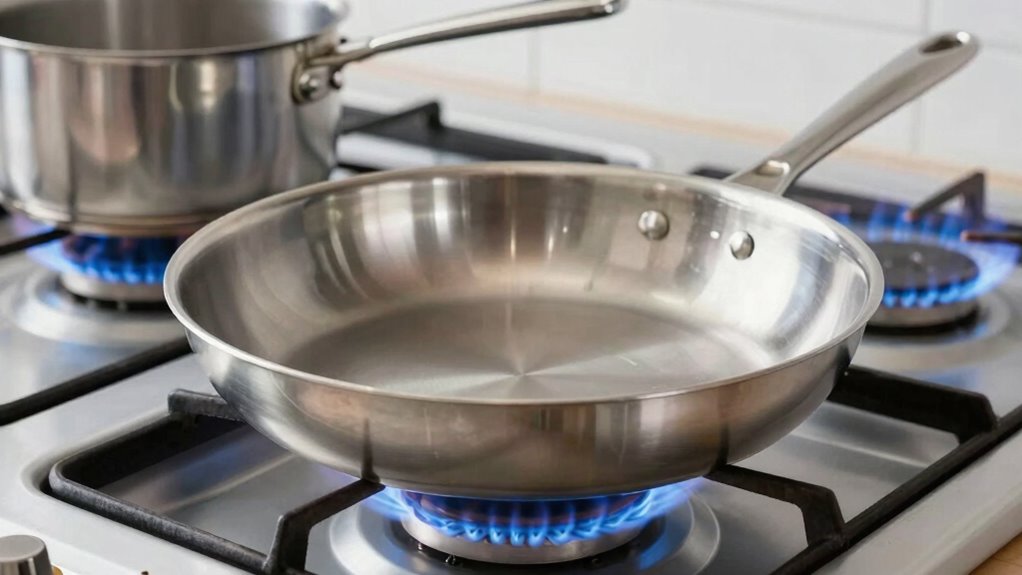

If you want cookware that works well on gas stoves, look for sets with responsive materials like stainless steel with aluminum cores or copper. These materials heat quickly, respond instantly to adjustments, and distribute heat evenly, preventing hot spots. Flat, smooth bottoms and good construction ensure better contact and stability. Choosing cookware designed for gas makes cooking easier and results more consistent. To discover more about maximizing your cookware performance, keep exploring what makes the best options for your stove.

Get kitchen staples and gadgets delivered free with Prime
- Fast, free delivery on millions of items
- Prime Video, Amazon Music and more included
- Member-only deals all year
Key Takeaways
- Cookware with flat, smooth bottoms ensures maximum contact for efficient heat transfer on gas burners.
- Materials like stainless steel with aluminum cores respond quickly and distribute heat evenly.
- Compatible materials, such as cast iron, retain heat well, providing consistent cooking results.
- High-quality construction with sturdy handles and bases improves stability and responsiveness.
- Properly designed cookware prevents hot spots and uneven heating, optimizing gas stove performance.

Cooking on a gas stove offers precise heat control and quick response times, making it vital to choose the right cookware set to maximize your kitchen’s efficiency. Gas stoves excel at providing immediate adjustments in temperature, but your cookware must be compatible to harness this advantage fully. Material compatibility is essential because some materials conduct heat better on gas burners than others. For example, stainless steel with an aluminum core is highly responsive, guaranteeing your pots heat evenly and quickly. Cast iron, while excellent at retaining heat, heats more slowly but provides consistent warmth once hot. Non-stick coatings can be convenient but may not perform as well if the material isn’t designed to withstand direct flame or high temperatures. Choosing cookware that’s compatible with gas ensures you won’t experience uneven cooking or hot spots, which can ruin dishes or cause frustration. Proper heat conduction enhances cooking performance and ensures your dishes turn out just right every time.
Heat distribution is another key factor. Gas stoves can produce a very intense and direct flame, so your cookware needs to distribute heat evenly across its surface. Poor heat distribution leads to hot spots that can burn food in some areas while leaving others undercooked. Cookware with a layered or bonded base, such as clad stainless steel or aluminum, helps disperse heat uniformly. These materials absorb heat quickly and transfer it evenly, which is essential for delicate sauces or precise simmering. If your cookware has a warped or uneven bottom, the contact with the flame becomes inconsistent, causing uneven heating. This is especially noticeable with thinner pots and pans. Investing in cookware with a flat, smooth bottom ensures maximum contact with the flame, making heat distribution more efficient and reliable. Additionally, the construction quality of the cookware impacts performance on a gas stove. Well-made pieces tend to have sturdy handles and solid bases, reducing wobbling and ensuring stability during cooking. When you select cookware tailored for gas stoves, you’ll notice better responsiveness and more predictable results. Keep in mind that some materials, like copper, offer excellent heat conduction but may require more maintenance or specific compatibility considerations. Properly chosen cookware enhances your cooking experience, reduces energy waste, and guarantees your dishes turn out just right every time.
stainless steel cookware with aluminum core
As an affiliate, we earn on qualifying purchases.
As an affiliate, we earn on qualifying purchases.
Frequently Asked Questions
Are All Cookware Materials Suitable for Gas Stoves?
Not all cookware materials are suitable for gas stoves. You should choose options like cast iron, stainless steel, or copper because they offer good durability and heat conduction. Using the right cookware guarantees cooking safety and prevents damage to your stove. Avoid materials like glass or non-stick coated pans, which may warp or release harmful fumes under direct high heat. Always prioritize durability and safety for the best cooking experience.
How Does Cookware Weight Affect Cooking on Gas Stoves?
Cookware weight impacts your cooking because heavier pots and pans usually have better heat retention, which helps maintain consistent heat on gas stoves. When you use lightweight cookware, it heats up quickly but loses heat easily, causing uneven cooking. Heavier cookware distributes heat more evenly, making it easier to control temperature and prevent hot spots. So, choosing balanced cookware weight can improve your cooking results on gas stoves.
Can I Use Glass or Ceramic Cookware on Gas Stoves Safely?
You can definitely use glass or ceramic cookware on gas stoves, but you gotta be cautious! These materials are oven compatible, so they handle high heat well, but their non-stick coatings can crack or peel if exposed to sudden temperature changes. Always check the manufacturer’s guidelines for oven compatibility and avoid direct flames or rapid heating to keep your cookware safe and in top shape.
Do Specific Shapes of Cookware Improve Heat Distribution on Gas Stoves?
Yes, specific shapes of cookware can improve heat distribution on gas stoves. Shape optimization helps guarantee even heat consistency by allowing better contact with the flame and heat source. For example, flat-bottomed pans distribute heat more evenly than rounded ones, reducing hot spots. Choose cookware with a well-designed shape to maximize heat transfer, avoid warping, and achieve consistent cooking results on your gas stove.
How Does Cookware Handle Uneven Heat Distribution on Gas Stoves?
You can handle uneven heat distribution by choosing cookware with good heat conduction, like copper or aluminum. These materials spread heat evenly, preventing hot spots. Additionally, make sure your cookware is compatible with gas stoves, as some materials may warp or not conduct heat well. Using flat-bottomed pots and pans also helps improve contact with the flame, promoting better heat distribution and cooking results.
copper cookware set for gas stove
As an affiliate, we earn on qualifying purchases.
As an affiliate, we earn on qualifying purchases.
Conclusion
So, next time you’re choosing cookware for your gas stove, remember that the right set can make all the difference. Imagine the perfect meal, cooked just right, every time. But what if the wrong cookware could hold you back, even if you don’t realize it? Stay tuned—your ideal combination might be closer than you think. The secret to effortless cooking is just waiting to be uncovered. Are you ready to discover it?
flat bottom non-stick pots and pans
As an affiliate, we earn on qualifying purchases.
As an affiliate, we earn on qualifying purchases.
As an affiliate, we earn on qualifying purchases.
Fall Picks
fall essentials
As an affiliate, we earn on qualifying purchases.