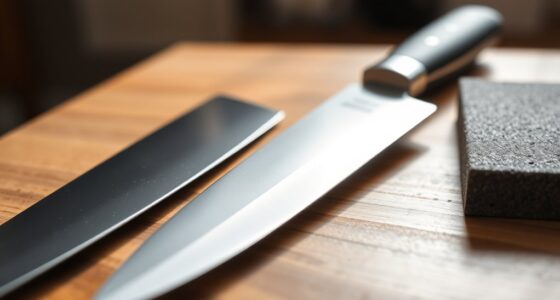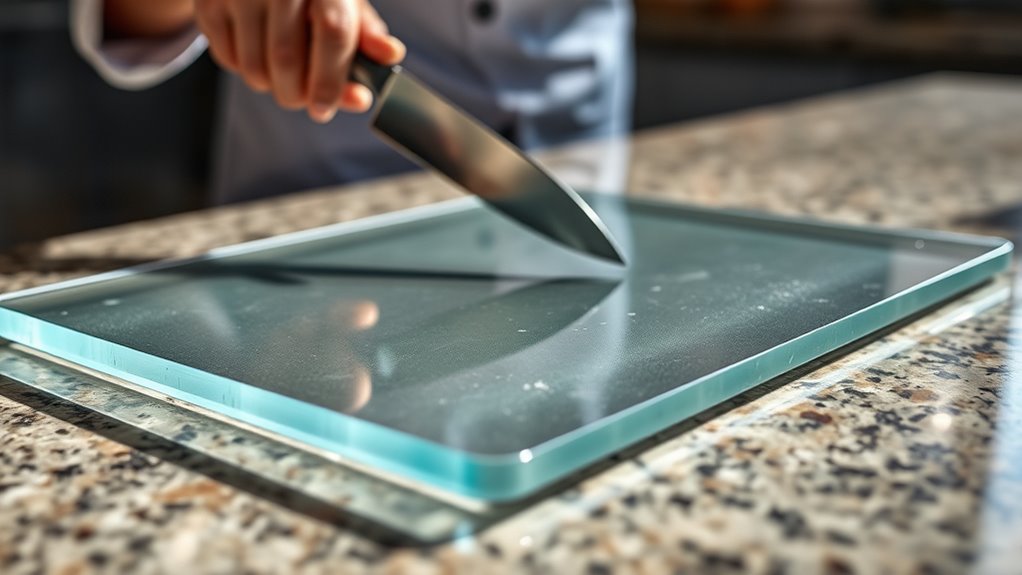

Many chefs advise avoiding glass cutting boards because they can damage your knives quickly and dull blades faster than wood or plastic. They are non-porous and easy to clean, but cracks and chips can hide bacteria and harbor germs, increasing the risk of cross-contamination. Plus, glass is prone to chipping or breaking, which poses safety concerns. If you want to protect your knives and guarantee food safety, it’s best to contemplate safer, more durable alternatives. Keep exploring to learn more about why other materials might be better.

Get kitchen staples and gadgets delivered free with Prime
- Fast, free delivery on millions of items
- Prime Video, Amazon Music and more included
- Member-only deals all year
Key Takeaways
- Glass cutting boards dull knives quickly, increasing the need for frequent sharpening or replacement.
- They can develop cracks and chips that harbor bacteria, posing hygiene risks.
- Glass surfaces are prone to breaking or chipping, reducing their durability and safety.
- Hard glass damages knife edges more than wood or plastic, shortening their lifespan.
- Chefs recommend materials like wood or plastic for better knife care and food safety.

Glass cutting boards are a sleek and durable alternative to traditional wooden or plastic surfaces. They look modern and can easily complement any kitchen decor. However, despite their aesthetic appeal, many professional chefs and culinary experts advise against using them. The main reasons boil down to concerns about knife damage and bacteria buildup. When you use a glass cutting board, your knives tend to suffer more wear and tear. Unlike wooden or plastic boards, which have some give and can absorb the impact, glass is hard and unforgiving. Every cut you make on a glass surface dulls your knives faster, requiring more frequent sharpening or replacement. Over time, this can become a costly nuisance and can even compromise your ability to cut efficiently and safely.
More importantly, glass boards can contribute to bacteria buildup, which poses a significant health risk. While they are non-porous and easy to clean, their smooth surface can hide microscopic cracks and chips that develop over time. These tiny crevices create a perfect environment for bacteria to hide and multiply, especially if you don’t inspect the board carefully after each use. Food particles can get lodged in these imperfections, making thorough cleaning difficult. If you’re not meticulous, bacteria might remain even after washing, increasing the risk of cross-contamination. This is particularly problematic when switching between raw meats, vegetables, and cooked foods, as bacteria from one surface can transfer to others and cause foodborne illnesses.
Glass boards can hide microscopic cracks, allowing bacteria to grow and increasing cross-contamination risks.
Furthermore, the hardness of glass makes it more prone to chipping and cracking, especially if you accidentally drop it or use excessive force. Once chipped, the surface becomes even more difficult to clean properly, and bacteria can settle into those damaged spots. Chefs who prioritize food safety and efficiency tend to avoid glass because it doesn’t provide the same safety and longevity as traditional cutting surfaces. Instead, they opt for bamboo, wood, or high-quality plastics that are gentler on knives and easier to sanitize without risking hidden bacteria or damaging the cutting tools. Additionally, many cutting boards designed for professional use feature antimicrobial properties, which help reduce bacteria growth and improve hygiene.
In the end, while glass cutting boards might seem like a stylish choice, they come with drawbacks that can compromise your knives and your kitchen’s hygiene. If you’re serious about maintaining your tools and ensuring food safety, it’s best to look elsewhere for a cutting surface. Chefs recommend durable, non-porous materials that won’t dull your knives quickly or harbor bacteria in unseen cracks. Your knives and your health will thank you.
As an affiliate, we earn on qualifying purchases.
Frequently Asked Questions
Are Glass Cutting Boards Dishwasher Safe?
Yes, glass cutting boards are dishwasher safe, making cleanup easy. However, their sleek look can clash with your kitchen aesthetics, and they lack heat resistance, so you can’t use them near hot pots or pans. While convenient, you should weigh their modern style against potential durability issues, as frequent dishwasher use may cause chipping or cracking over time. Consider these factors before choosing a glass cutting board for your kitchen.
Do Glass Boards Harbor Bacteria?
You should know that glass boards can harbor bacteria, with studies showing bacterial growth can double within hours if not properly cleaned. Surface contamination is a real concern, as bacteria can hide in tiny scratches or uneven surfaces. While they’re easy to disinfect, they don’t prevent bacterial growth, so you need to clean them thoroughly after each use to keep your food safe.
How Do Glass Cutting Boards Compare to Wood?
Compared to wood, glass cutting boards are more durable and resistant to scratches, but they can chip or shatter easily under impact. They also offer a sleek, modern aesthetic appeal that enhances your kitchen’s look. However, glass boards are harder on knives, dulling blades faster, whereas wood is gentler, helping your knives stay sharper longer. Choose based on your priorities: durability and style or knife preservation.
Can Glass Boards Sharpen Knives?
You won’t sharpen knives on a glass board; instead, you risk damaging your blades. The smooth, hard surface may seem ideal, but it causes knife damage by dulling edges and creating glass surface scratches. Each cut chips away at your blade’s sharpness, making it less effective over time. For a safer, more durable option, choose wood or composite boards that protect your knives and keep them sharp longer.
Are There Any Safety Hazards Using Glass Cutting Boards?
Using glass cutting boards can pose safety hazards because of their sharp edges and the risk of glass shattering. You might accidentally cut yourself on the edges or cause shards to break off, which could lead to injuries. Additionally, if the glass shatters, it creates dangerous sharp pieces that are difficult to clean up and could cause cuts or other accidents. Always handle glass boards with care to minimize these risks.
plastic cutting boards food safe
As an affiliate, we earn on qualifying purchases.
As an affiliate, we earn on qualifying purchases.
Conclusion
While glass cutting boards might catch your eye with their sleek look, many chefs gently suggest steering clear. They believe these boards can be a bit too unforgiving on your knives and might bring a little more sparkle than practicality to your kitchen. So, if you’re aiming for a smoother, safer chopping experience, it’s worth considering other options. After all, your tools—and your food—deserve the best, even if it means passing on the glass.
As an affiliate, we earn on qualifying purchases.
As an affiliate, we earn on qualifying purchases.
Halloween Picks
halloween
As an affiliate, we earn on qualifying purchases.