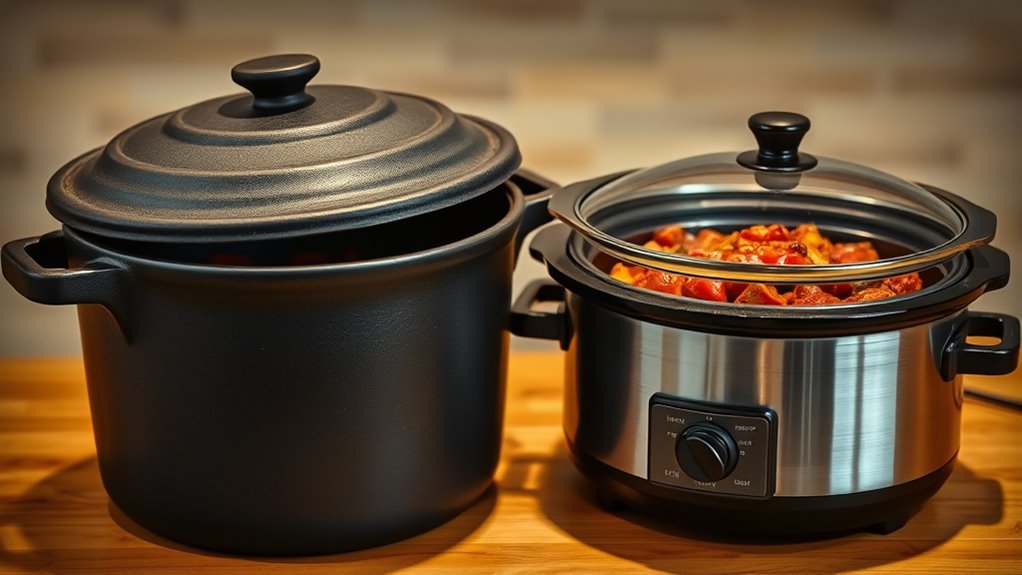

A Dutch oven is a versatile, heavy-duty pot made of cast iron that works well on the stovetop and in the oven, ideal for browning, braising, and roasting. A slow cooker is a modern electric appliance designed for easy, hands-off simmering, perfect for tough cuts and flavor melding. Both tools have unique advantages and safety considerations. Explore further to understand how each can elevate your cooking methods and why choosing the right one matters.
Key Takeaways
- Dutch ovens are versatile, suitable for stovetop and oven cooking, while slow cookers are specialized electric appliances for unattended, long-duration cooking.
- Dutch ovens excel at browning and searing, whereas slow cookers focus on slow, steady simmering for tender results.
- Dutch ovens require manual handling and safety precautions due to their heavy weight and heat retention; slow cookers are safer and more convenient for unattended use.
- Dutch ovens are traditional, multi-purpose cookware, while slow cookers are modern, appliance-based tools designed for ease and automation.
- Proper maintenance extends the lifespan of both, but Dutch ovens demand more careful cleaning and handling given their material and heat sources.

When it comes to preparing delicious, slow-cooked meals, choosing between a Dutch oven and a slow cooker can make a big difference in your cooking experience. Both tools excel at creating tender, flavorful dishes, but they do so through different cooking techniques and safety considerations. Understanding these differences helps you pick the right tool for your needs and guarantees you cook safely.
Choosing between a Dutch oven and a slow cooker impacts your cooking style and safety; understanding their differences ensures delicious, safe meals.
A Dutch oven is a versatile, heavy-duty pot typically made of cast iron, often enameled on the inside. Its design allows you to use it on the stovetop or in the oven, making it ideal for a variety of cooking techniques like searing, braising, and roasting. When using a Dutch oven, you can quickly start a dish with high heat and then slow it down to simmer, which helps develop complex flavors. Additionally, a Dutch oven’s ability to transition seamlessly between different heat sources enhances its flexibility in the kitchen. However, because it’s heavy and retains heat well, safety precautions are necessary. Always handle it with oven mitts, especially when removing it from the oven, and be cautious of hot surfaces that can cause burns. Proper kitchen safety also involves guaranteeing the pot is stable on your stovetop or oven rack to prevent spills or accidents.
In contrast, a slow cooker offers a more modern approach, designed for convenience and set-it-and-forget-it cooking. You simply add ingredients, select a heat setting, and let it do the work over hours. Slow cookers use low, steady heat to gently break down tough cuts of meat and meld flavors over time. Because they’re electric and enclosed, they minimize the risk of splatters and burns, making them safer to leave unattended. However, it’s vital to make certain to follow proper safety guidelines, such as ensuring the lid is secure to prevent spills and not overfilling the cooker to avoid overflow or uneven cooking. Additionally, using the correct temperature settings and avoiding abrupt temperature changes helps maintain food safety and ideal results.
Both tools require understanding their unique cooking techniques to maximize flavor and texture. The Dutch oven’s ability to go from stovetop to oven offers flexibility, especially when you need to brown ingredients before slow cooking. Meanwhile, the slow cooker’s consistent, low heat simplifies the process, making it perfect for busy days. No matter which you choose, prioritizing kitchen safety guarantees you enjoy delicious meals without accidents. Use oven mitts, keep flammable items away from heat sources, and never leave cooking unattended for extended periods. Proper care and maintenance of your cookware, whether Dutch oven or slow cooker, will extend its lifespan and ensure safe, effective cooking. With proper handling and understanding of their techniques, both tools can become invaluable in your kitchen, helping you craft hearty, flavorful dishes efficiently and safely.
Top picks for "dutch oven slow"
Open Amazon search results for this keyword.
As an affiliate, we earn on qualifying purchases.
Frequently Asked Questions
Which Appliance Retains Heat Better for Even Cooking?
A Dutch oven retains heat better for even cooking because of its superior heat retention and thermal stability. Its thick, cast-iron construction distributes heat evenly and holds it longer, making it ideal for slow, consistent cooking. A slow cooker also retains heat well but doesn’t match the thermal stability of a Dutch oven. If you want consistent, even heat, the Dutch oven’s better heat retention gives you an edge.
Are Dutch Ovens More Versatile Than Slow Cookers?
Yes, Dutch ovens are more versatile than slow cookers. They excel in cooking versatility, allowing you to sear, bake, braise, and simmer, making them suitable for a wide range of recipes. Their recipe adaptability means you can go from stovetop to oven seamlessly, whereas slow cookers are mainly designed for slow, low-temperature cooking. This flexibility makes the Dutch oven a more multifunctional tool in your kitchen.
How Do Cleaning and Maintenance Differ Between the Two?
Cleaning procedures for a Dutch oven involve hand washing with warm, soapy water and avoiding harsh abrasives to protect the enamel or seasoning. Slow cookers often have removable, dishwasher-safe inserts, making cleanup easier. Maintenance requirements differ: Dutch ovens need regular seasoning and careful handling to prevent damage, while slow cookers require checking seals and electrical parts. You’ll find Dutch ovens more durable, but slow cookers offer convenience with less upkeep.
Can Both Appliances Be Used for Baking?
Yes, both appliances can be used for baking, but they require different techniques. With a Dutch oven, you can master baking techniques like bread baking, thanks to its excellent heat retention and consistent temperature control. A slow cooker isn’t ideal for traditional baking, as it lacks precise temperature control, but you can still make desserts like cobblers and cakes by adapting recipes. Always monitor temperature to achieve best results.
Which Is More Energy-Efficient for Prolonged Cooking?
For prolonged cooking, a slow cooker is more energy-efficient because it uses less electricity consumption over time. Its low, consistent heat setting promotes energy savings compared to a Dutch oven, which often requires higher heat and more active stove time. If you’re looking to minimize energy use during extended cooking, choose a slow cooker, as it’s designed for energy-efficient operation without sacrificing flavor or results.
Conclusion
Whether you prefer the timeless charm of a Dutch oven or the modern convenience of a slow cooker, both bring warmth and flavor to your kitchen. Think of the Dutch oven as a sturdy old friend, simmering with tradition, while the slow cooker is your sleek new companion, ready at a moment’s notice. Whichever you choose, you’re crafting comfort, weaving memories into every meal. In the end, it’s about enjoying the journey, one delicious bite at a time.