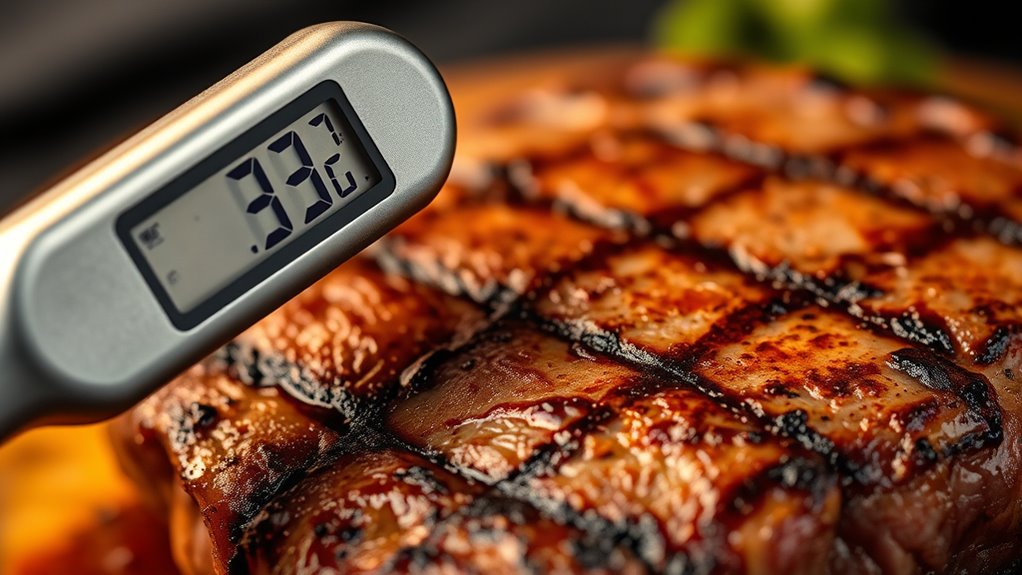
To use a meat thermometer effectively, insert the probe into the thickest part of the meat, avoiding bones and fat. Make sure it’s calibrated by testing in ice water or boiling water, adjusting if needed. During cooking, check the internal temperature once or twice, and remove the meat just before it hits your target to prevent overcooking. Rest the meat to let juices settle. Keep practicing, and you’ll master perfect results—if you continue exploring, you’ll discover more tips.
Key Takeaways
- Calibrate your thermometer regularly using ice water for accurate readings.
- Insert the probe into the thickest part of the meat, avoiding bones and fat.
- Check internal temperature once or twice during cooking to ensure proper doneness.
- Remove meat slightly before the target temperature to account for carryover cooking.
- Allow meat to rest after cooking to let juices redistribute and improve flavor.

A reliable meat thermometer is essential for cooking meat safely and perfectly every time. When you’re aiming for tender, flavorful results, understanding proper cooking techniques paired with accurate temperature readings makes all the difference. One of the key aspects of using a meat thermometer effectively is ensuring it’s properly calibrated. If your thermometer isn’t calibrated correctly, the temperature readings could be be off, leading to undercooked or overcooked meat. To calibrate your thermometer, you can use the ice water method: submerge the probe in a glass of ice water and wait for a few minutes. The thermometer should read 32°F (0°C). If it doesn’t, adjust the calibration dial or note the difference so you can compensate when cooking. Some digital thermometers have calibration features built-in, which simplifies this process. Regular calibration ensures your readings stay accurate over time, making your cooking techniques more reliable.
Once your thermometer is calibrated, integrating it into your cooking process is straightforward. For best results, insert the probe into the thickest part of the meat, avoiding bones or fat, which can give misleading readings. Keep in mind that the temperature you see on the display indicates the internal temperature of the meat, not the surface. During cooking, you should check the temperature at least once or twice, especially if you’re aiming for specific doneness levels like medium-rare or well-done. Using the thermometer at the right time prevents you from cutting into the meat too early, which can cause juices to escape and compromise texture. Additionally, understanding the importance of contrast ratio in visual presentation can help you better judge when your meat reaches the perfect doneness level by appearance, especially if you are using a high-quality home theatre projector setup to monitor your cook visually.
Mastering cooking techniques with your thermometer also involves knowing when to remove the meat from heat. Many recipes specify a target temperature, but remember that carryover cooking can raise the internal temperature by a few degrees after removing it from the heat. So, it’s wise to take the meat off the heat just before reaching the final target temperature. Resting the meat allows juices to redistribute, ensuring each bite remains moist and flavorful. As you become more familiar with your thermometer’s accuracy and your preferred doneness levels, you’ll develop instincts for perfect results every time.

Alpha Grillers Meat Thermometer Digital – Instant Read Food Thermometer for Cooking & Grilling – Professional Kitchen Gifts for Men, Dad & Mom
Instant Read Food Thermometer | Our instant read thermometer features a temperature probe and advanced, highly accurate technology…
As an affiliate, we earn on qualifying purchases.
As an affiliate, we earn on qualifying purchases.
Frequently Asked Questions
Can I Use a Meat Thermometer for Poultry and Seafood?
Yes, you can use a meat thermometer for poultry and seafood. It helps verify poultry safety by checking that internal temperatures reach 165°F, preventing foodborne illnesses. For seafood, aim for doneness at around 145°F or until the flesh is opaque. Using a thermometer guarantees your poultry and seafood are cooked perfectly, reducing the risk of undercooking or overcooking, and making your meals both safe and delicious.
How Often Should I Calibrate My Meat Thermometer?
Calibrate your thermometer regularly to guarantee reliable readings and maintain thermometer accuracy. For consistent calibration frequency, consider calibrating at least once a month or whenever you notice inconsistent temperature readings. If your thermometer experiences shocks or extreme temperature changes, recalibrate immediately. Proper calibration keeps your thermometer precise, helping you cook meat perfectly every time. Remember, a well-calibrated thermometer is key to safe, succulent, and satisfying meals.
What’s the Best Way to Clean a Digital Meat Thermometer?
To clean your digital meat thermometer, start by wiping it with a damp cloth and mild soap. Use cleaning tips like avoiding submerging the digital part in water. For sanitizing methods, wipe the probe with rubbing alcohol or a disinfectant wipe after each use to prevent germs. Always dry it thoroughly, especially around the digital display, to make sure it stays accurate and in good condition.
Are There Wireless Meat Thermometers Available?
Yes, wireless meat thermometers are available. They use wireless technology to connect to your smartphone or tablet, allowing for remote monitoring of your meat’s temperature. This means you can keep an eye on your cooking without opening the oven or grill, ensuring perfect results every time. Look for models with reliable Bluetooth or Wi-Fi connectivity, so you stay updated on your meat’s progress from anywhere in your kitchen or backyard.
How Do I Prevent Temperature Loss When Inserting the Probe?
Think of your meat as a secret waiting to be uncovered—you don’t want to lose its warmth. When you insert the probe, do it quickly and smoothly to minimize temperature loss. To keep the heat locked in, preheat the thermometer beforehand and insert the probe at a slight angle, sealing the entry point with your hand if needed. This way, your meat stays juicy and cooked to perfection.
Alpha Grillers Meat Thermometer Digital – Instant Read Food Thermometer for Cooking & Grilling – Professional Kitchen Gifts for Men, Dad & Mom
Instant Read Food Thermometer | Our instant read thermometer features a temperature probe and advanced, highly accurate technology…
As an affiliate, we earn on qualifying purchases.
As an affiliate, we earn on qualifying purchases.
Conclusion
Using a meat thermometer guarantees your meat reaches the perfect doneness every time. Did you know that over 60% of home cooks admit to guessing when their meat is done? With a thermometer, you eliminate guesswork and serve juicy, safe-to-eat meat. So next time you’re cooking, trust your thermometer for consistent, delicious results — it’s a small tool that makes a big difference in your culinary success!
Alpha Grillers Meat Thermometer Digital – Instant Read Food Thermometer for Cooking & Grilling – Professional Kitchen Gifts for Men, Dad & Mom
Instant Read Food Thermometer | Our instant read thermometer features a temperature probe and advanced, highly accurate technology…
As an affiliate, we earn on qualifying purchases.
As an affiliate, we earn on qualifying purchases.
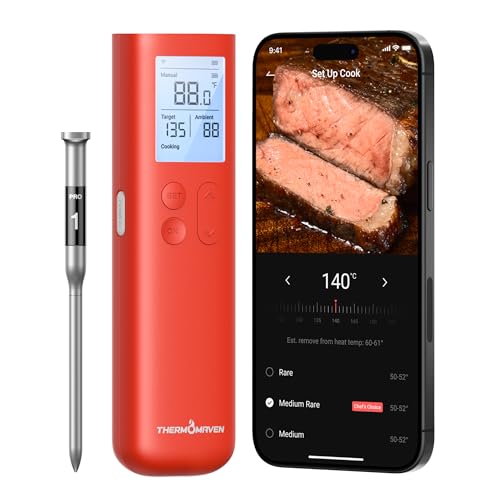
ThermoMaven Smart Bluetooth Wireless Meat Thermometer, 10X Enhanced Sub-1G Signal and Stability, Standalone Display Base, Certified Accuracy ±0.5°F, WiFi Unlimited Range for BBQ, Oven, Smoker, Grill
Smart Display Base with Control: The ThermoMaven G1 wireless meat thermometer features a versatile smart display base that…
As an affiliate, we earn on qualifying purchases.
As an affiliate, we earn on qualifying purchases.