To determine if your pan is oven-safe, check the manufacturer’s guidelines and look for labels or symbols indicating oven use. Materials like cast iron, stainless steel, or oven-safe ceramics are typically safe, but nonstick coatings may not be designed to handle high heat. Examine the handles for heat-resistant materials and make sure they’re securely attached. Properly verifying these details helps prevent accidents. Keep going, and you’ll find tips to ensure your cookware’s safe and effective use in the oven.

Get kitchen staples and gadgets delivered free with Prime
- Fast, free delivery on millions of items
- Prime Video, Amazon Music and more included
- Member-only deals all year
Key Takeaways
- Check the manufacturer’s label or packaging for oven-safe symbols or instructions.
- Confirm the pan’s material (cast iron, stainless steel, oven-grade ceramics) is designed for high heat.
- Inspect handle materials to ensure they are heat-resistant and securely attached.
- Review customer feedback and reviews for real-world oven use performance.
- Follow maintenance and care guidelines to preserve the pan’s safety features and prevent damage.

Oven-safe pans are essential tools that allow you to seamlessly shift from stovetop to oven, making your cooking more efficient and versatile. When selecting these pans, understanding their material safety is crucial. You need to be confident that the materials used won’t release harmful chemicals when heated to high temperatures. Most oven-safe pans are crafted from materials like cast iron, stainless steel, or oven-grade ceramics, which are known for their stability under heat. Avoid pans with nonstick coatings that aren’t rated for oven use, as some may degrade or emit fumes when exposed to high temperatures. Always check the manufacturer’s specifications to guarantee the pan’s material safety aligns with your cooking needs. This way, you prevent potential health risks and ensure your cookware remains safe over time.
In addition, verifying that the pan’s construction adheres to safety standards can provide extra assurance of its suitability for oven use. Handle durability is another essential aspect to consider. Handles need to withstand repeated exposure to heat without warping, cracking, or becoming loose. Many oven-safe pans feature sturdy, heat-resistant handles made from the same material as the body or from reinforced composites. If the handle feels flimsy or is attached with weak fittings, it can pose a safety risk when lifting hot pans out of the oven. A durable handle ensures you maintain control, reducing the chances of spills or accidents. Some handles are designed with ergonomic grips for comfort, which also helps you maintain a secure hold when managing heavy or hot cookware. Always inspect the handle’s construction and attachment points — they should be solid and well-built to endure frequent oven use.
Additionally, it’s worth noting that even the most durable handle can become compromised if the pan’s material safety isn’t up to standard. Over time, poor quality materials can degrade, leading to potential safety hazards or handle failure. Hence, invest in reputable brands that prioritize both material safety and handle durability. If you’re unsure, consult customer reviews or manufacturer guidelines for specific heat limits and care instructions. Proper maintenance and understanding of your cookware’s capabilities help prolong its lifespan and prevent accidents.
As an affiliate, we earn on qualifying purchases.
Frequently Asked Questions
Can I Use Non-Stick Pans in the Oven Safely?
You can generally use non-stick pans in the oven if the manufacturer states they’re oven-safe. Check for oven safety labels or temperature limits, as the non-stick coating can deteriorate or emit fumes at high heat. Avoid using non-stick pans with plastic handles or those not specified for oven use. Always follow the manufacturer’s guidelines to make certain your non-stick coating remains intact and safe during oven cooking.
Are Glass Pans Oven-Safe at High Temperatures?
Glass pans are generally oven-safe at high temperatures if they have good glass durability and heat resistance. You can use them for baking, roasting, or broiling, but always check the manufacturer’s guidelines first. Avoid sudden temperature changes to prevent cracking, and never exceed the recommended temperature. By understanding their heat resistance, you guarantee safe oven use and maintain the longevity of your glass cookware.
How Do I Know if My Ceramic Pan Can Go in the Oven?
You can determine if your ceramic pan is oven-safe by checking its ceramic durability and handle safety. Look for manufacturer labels or symbols on the bottom indicating oven safety. If the handles are made of heat-resistant material or are oven-proof, it’s a good sign. Always verify the maximum temperature it can handle—most ceramic pans are safe up to 450°F—ensuring both your ceramic’s durability and handle safety during oven use.
Can Metal Pans With Plastic Handles Be Oven-Used?
Think of your metal pan with plastic handles as a ship with fragile sails. Most plastic handles aren’t oven-safe, so exposing them to heat can cause melting or warping. While the metal pan itself is durable, the plastic handles often aren’t designed for oven use. To stay safe, check the manufacturer’s instructions—if it’s not explicitly oven-safe, avoid putting it in the oven to protect both your pan’s durability and your kitchen.
What Temperature Limits Should I Check for Oven-Safe Pans?
You should check your pan’s oven temperature limit to guarantee safe use. Most oven-safe pans tolerate up to 450°F, but some can handle higher temperatures. Always look for manufacturer guidelines or labels indicating the pan’s heat tolerance. Avoid exceeding the recommended oven temperature, as it can damage the pan or cause safety hazards. Knowing your pan’s oven temperature limit helps prevent mishaps and ensures proper cooking.
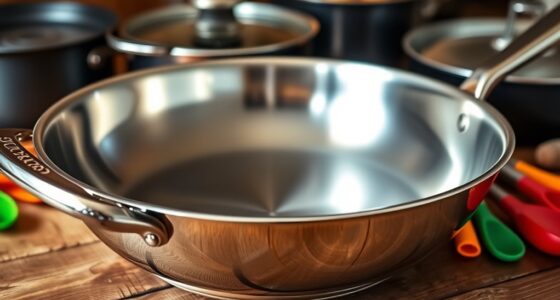
stainless steel oven-safe cookware
As an affiliate, we earn on qualifying purchases.
As an affiliate, we earn on qualifying purchases.
Conclusion
So next time you’re wondering if your pan can handle the heat, remember to check for oven-safe labels or materials. It’s funny how a quick glance can save you from a kitchen mishap—like discovering your favorite skillet isn’t oven friendly just when you’re ready to bake. By paying attention to these details, you’ll always be prepared, turning what could be a kitchen mishap into a simple, stress-free cooking moment.
As an affiliate, we earn on qualifying purchases.
As an affiliate, we earn on qualifying purchases.
NFL season / tailgating Picks
team gear
As an affiliate, we earn on qualifying purchases.