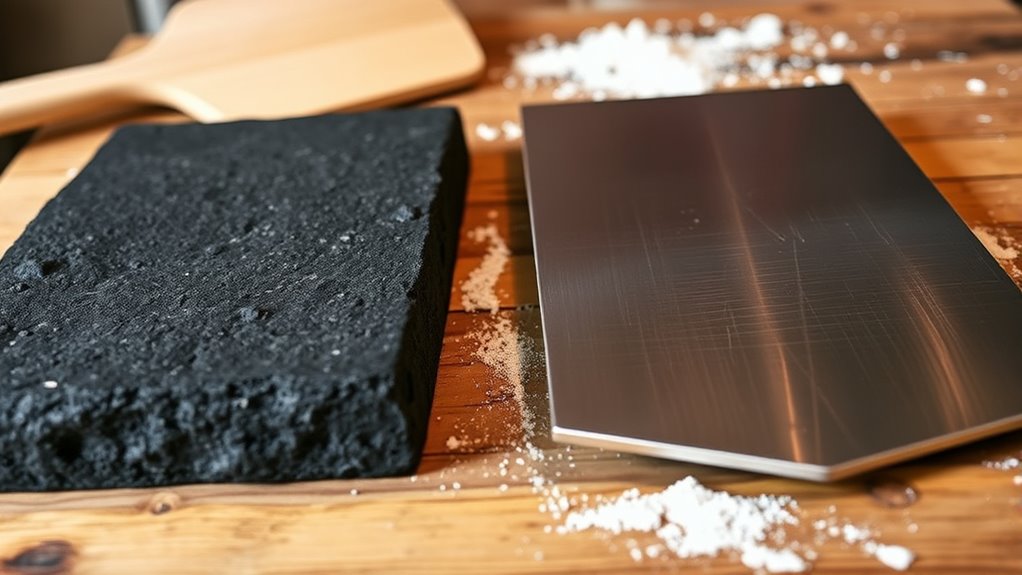

Baking steels heat up faster and transfer heat more efficiently than stones, helping you achieve a crispier, more evenly baked crust. Stones take longer to preheat but offer steady heat retention, resulting in a traditional texture. If you want quick, high-temperature results, a steel might be your best choice. However, both can produce great pizza depending on how you use them. Keep exploring to discover which material suits your baking style best.

Get kitchen staples and gadgets delivered free — and shop member deals
- Fast, free delivery on millions of items
- Access to Prime Big Deal Days deals on October 6–7
- Prime Video, Amazon Music and more included
Key Takeaways
- Baking steels heat faster and more efficiently, producing a crispier crust due to superior heat conduction.
- Baking stones provide more gradual, even heat, promoting better rise and traditional flaky textures.
- Steel’s quick heat transfer allows for shorter preheating times and rapid baking.
- Stones offer consistent, steady heat retention for more controlled, traditional baking results.
- The choice depends on preference for rapid, high-temperature baking (steel) versus gradual, even heating (stone).
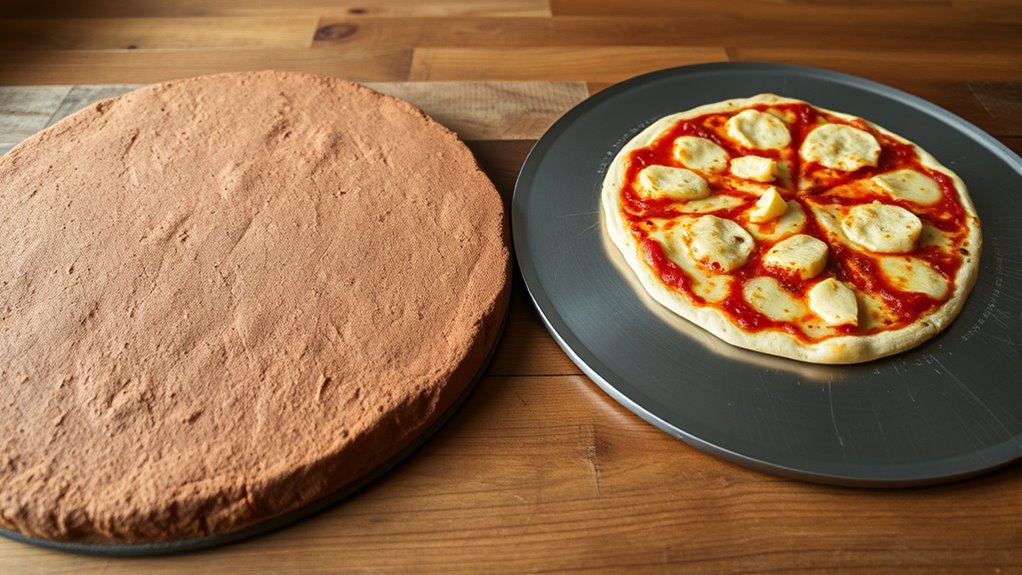
When it comes to achieving bakery-quality crusts at home, choosing between a baking stone and a baking steel can make a big difference. Both tools excel at providing the intense heat needed to create that perfect, crispy crust, but they do so in slightly different ways. Your decision largely hinges on how oven temperature and heat retention come into play during baking.
Choosing between a baking stone and steel affects heat transfer and crust quality for perfect homemade pizza.
A baking stone, often made of cordierite or ceramic, heats gradually and evenly, mimicking the traditional pizza oven environment. When you preheat it in your oven, it absorbs and stores heat, allowing it to release that stored energy directly into the dough. This sustained heat transfer helps develop a crust with a nice rise and a crisp bottom. However, because stones typically heat up slowly and may require a longer preheat time, you need to plan ahead. Once heated, they retain heat well, maintaining a consistent baking environment that promotes even cooking. This heat retention ensures your pizza’s bottom crisps up without burning, giving you a bakery-quality result.
On the other hand, a baking steel is usually made of steel, which conducts heat more efficiently than stone. When you place a steel in your oven and preheat it, it reaches the desired temperature faster due to its superior heat conduction. This means you can achieve the high oven temperature needed for a crispy crust more quickly, saving you time and energy. Steel’s excellent heat retention means it remains hot throughout the baking process, providing a consistent, intense heat that promotes rapid, even cooking. This efficient heat transfer results in a crust that’s not only crispy but also well-risen and flavorful, often better than what a stone can produce.
In essence, if you want a tool that heats up quickly and offers rapid, intense heat transfer, a baking steel might be your best choice. It excels at maintaining high oven temperatures and delivering direct heat, which translates into a beautifully crisp crust in less time. Meanwhile, if you prefer a more traditional approach with gradual heat buildup and excellent heat retention for consistent results, a baking stone can be just as effective. Both tools, when used correctly, will help you produce pizza with bakery-quality crusts, but your preference for heating speed and heat retention will guide your choice. Additionally, the choice of material can influence how quickly your pizza bakes and the final crust texture.
As an affiliate, we earn on qualifying purchases.
Frequently Asked Questions
Which Material Heats Faster for Pizza Baking?
Baking steel heats faster for pizza baking because it has higher thermal conductivity, allowing heat to transfer quickly to your dough. Its superior heat retention means it stays hot longer, ensuring a crisp crust. In contrast, a baking stone heats more slowly but retains heat well once up to temperature. If you want quick, intense heat to get that perfect crust, a baking steel is your best choice.
Can Baking Steels Be Used for Other Baked Goods?
Yes, you can definitely use baking steels for other baked goods. They’re great for alternative uses, like bread, cookies, or roasting vegetables, thanks to their excellent heat conduction. Their durability and high heat capacity make them perfect for creative baking projects, giving you even, consistent results. Just make sure you adjust your recipes if needed, and you’ll enjoy versatile, professional-quality baked treats using your baking steel beyond just pizza.
How Do Cleaning and Maintenance Differ Between the Two?
You should know that cleaning routines and maintenance requirements differ considerably. For baking steels, you can wipe them down with a damp cloth after use, avoiding soap or water that might cause rust. Baking stones, however, need gentle brushing and should never be soaked or washed with soap, as they absorb moisture. Regularly inspect both for cracks or damage to guarantee they stay in good shape, but steels generally require less upkeep.
Which Option Is More Cost-Effective Long-Term?
You’ll find that baking steel is more cost-effective long-term because its durability means it lasts longer and withstands higher temperatures without cracking. Although the upfront cost may be higher, the savings on replacements and maintenance make it a better investment. The steel’s resilience ensures consistent performance over time, helping you save money while enjoying perfect pizzas, making it the smarter choice for long-term cost savings.
Are There Specific Pizza Styles That Suit One Better?
If you prefer thin, crispy crusts, a baking steel works better because it heats faster and retains high heat, giving you that perfect crunch. For thicker, chewier pizza styles like Sicilian or pan pizza, a baking stone helps develop a more substantial crust with even heat distribution. Choose based on your crust preferences and the pizza styles you enjoy most, ensuring your equipment complements your desired outcome.
As an affiliate, we earn on qualifying purchases.
Conclusion
In the battle of baking stone versus baking steel, your choice can turn your home oven into a legendary pizza-making powerhouse. While both deliver incredible heat for that perfect crust, the steel’s superior heat conduction might just make your pizza crust so crispy it could break the internet. Whichever you pick, you’re about to elevate your pizza game to legendary status—so get ready to impress everyone and turn your kitchen into a pizzeria that’s truly out of this world.
As an affiliate, we earn on qualifying purchases.
As an affiliate, we earn on qualifying purchases.
NFL season / tailgating Picks
team gear
As an affiliate, we earn on qualifying purchases.