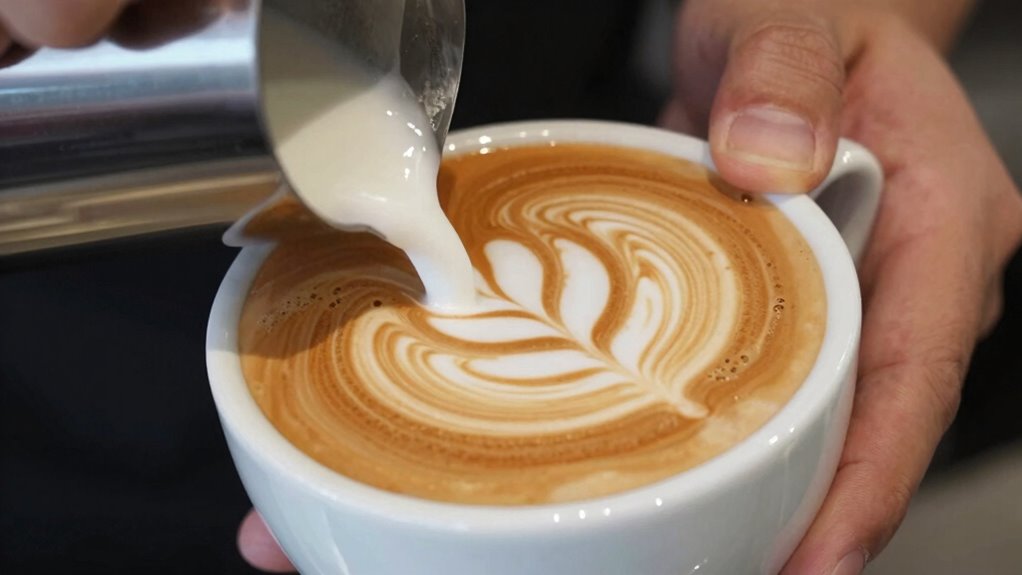
Your milk texture is key to making great espresso drinks at home because it affects flavor, mouthfeel, and presentation. Smooth, silky microfoam balances the espresso’s bitterness with sweetness and creates a luxurious, cohesive drink. Proper steaming techniques guarantee your milk looks glossy and pours beautifully into latte art. When you master milk texture, your coffee becomes more enjoyable and café-quality. Keep exploring, and you’ll discover how the right technique elevates every cup you make.
Key Takeaways
- Proper milk texture enhances flavor balance by blending smoothly with espresso, reducing bitterness and increasing sweetness.
- Silky microfoam improves mouthfeel, creating a rich, creamy, and luxurious drinking experience.
- Well-textured milk allows for better latte art, indicating quality microfoam and skillful steaming.
- Consistent milk texture ensures the drink looks appealing and tastes harmonious, elevating home coffee quality.
- Achieving ideal milk texture requires skill, temperature control, and practice, leading to professional-quality espresso drinks at home.
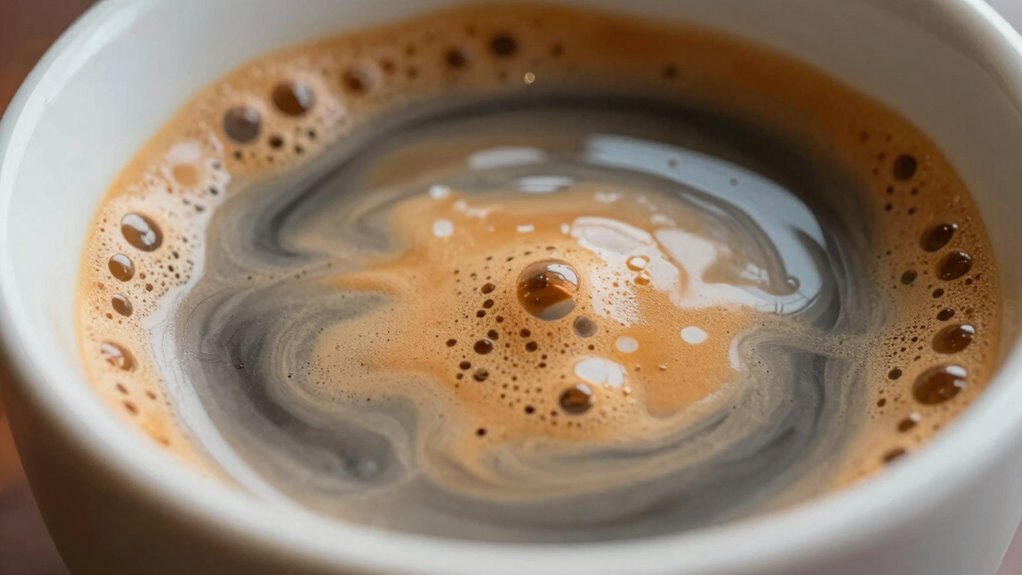
Have you ever wondered why some home espresso drinks have silky, smooth milk while others feel frothy or thin? The secret often lies in your milk steaming techniques and how you approach latte art. Milk texture is more than just a visual detail — it directly impacts the flavor, mouthfeel, and overall enjoyment of your coffee. When you master the right milk steaming techniques, you’ll notice your drinks become richer, creamier, and more balanced.
Getting the texture right starts with how you steam your milk. If you focus on milk steaming techniques, you’ll learn to introduce just the right amount of air into the milk and then incorporate it seamlessly. This process creates microfoam—tiny, velvety bubbles that give your milk its silky consistency. Over-aerating results in froth that’s too thick and airy, which can overpower the espresso’s flavor. On the other hand, under-steaming produces warm but flat milk, lacking the smoothness that elevates your drink. Practice is key; aim for a glossy, paint-like surface with a consistent, velvety texture. Additionally, understanding the importance of microfoam in achieving the ideal milk texture can significantly improve your results. Developing your steaming technique can help you consistently produce the perfect microfoam for your drinks. Improving your milk temperature control can also ensure optimal texture and flavor, making your drinks more enjoyable. Remember, temperature management is crucial for maintaining the right balance between heat and foam quality, which influences both flavor and texture. Recognizing the impact of foam stability on the final presentation can help you troubleshoot issues and refine your skills further.
Master milk steaming by balancing air incorporation for smooth, velvety microfoam and a glossy, paint-like finish.
Once you’ve perfected your steaming technique, latte art becomes a natural next step. Latte art isn’t just about creating pretty designs; it’s a sign that your milk has the right texture. Smooth, well-steamed milk allows you to pour intricate patterns like hearts or rosettas with ease. When you pour, the microfoam should blend seamlessly with the espresso, flowing smoothly and creating contrast that forms the art. Achieving that silky look shows that you’ve successfully created the ideal milk texture, which enhances both aesthetics and taste.
Understanding why milk texture matters helps you appreciate the artistry behind a perfect home espresso. When your milk is smooth and velvety, it melds beautifully with the espresso, balancing bitterness with a gentle sweetness. The mouthfeel becomes creamy, and every sip feels luxurious. Conversely, if your milk is too frothy or thin, the drink can feel unbalanced, with textures that distract from the flavor. Investing time in honing your milk steaming techniques pays off, making your early attempts at latte art smoother and more impressive.
Ultimately, the difference between a good home espresso and a great one often comes down to that final touch—the milk. When you pay attention to your milk steaming techniques and practice latte art, you’re not just making coffee; you’re creating a crafted experience. Silky, textured milk transforms your simple espresso into a decadent, cafe-quality drink that’s as pleasing to the eye as it is to the palate.

Milk Frothing Pitcher 350ml/600ml/900ml/1500ml (12oz/20oz/32oz/50oz) Steaming Pitchers Stainless Steel Milk/Coffee/Cappuccino/Latte Art Barista Steam Pitchers Milk Jug Cup with Art Pen,12oz
Perfect Combination Of Milk Frothing Pitcher And Latte Art Pen: The milk frother jug can be used in…
As an affiliate, we earn on qualifying purchases.
As an affiliate, we earn on qualifying purchases.
Frequently Asked Questions
How Does Milk Temperature Affect Texture?
Milk temperature directly influences texture consistency, making it smoother or frothier. When you heat milk too much, it can become thin and lose its velvety feel, while too little warmth results in less foam stability. Ideally, maintain your milk between 140-150°F to achieve a creamy, well-textured finish. Proper temperature guarantees your milk’s texture is perfect for latte art and a balanced, rich flavor in your espresso drinks.
Can Non-Dairy Milk Achieve Similar Textures?
Did you know that nearly 80% of consumers now choose plant-based alternatives? Non-dairy milks can achieve similar textures with the right technique, but dairy often holds an edge for creaminess. Dairy vs non-dairy options each have unique properties, so experiment with frothing methods like steaming or shaking. With patience, you can create rich, velvety foam that rivals traditional milk, making your home espresso truly satisfying.
What Tools Are Best for Frothing Milk at Home?
You should opt for a good milk frother, like a handheld electric wand or a stand-alone frothing pitcher, to achieve ideal milk texture. These tools help you control frothing, enhancing your coffee flavor and creating a creamy, smooth finish. Remember, regular equipment maintenance keeps your frother working well, ensuring consistent results. Investing in quality tools makes frothing easier and elevates your overall home espresso experience.
How Does Milk Type Influence Foam Stability?
Think of milk as a delicate ballet, where milk fat and protein structure choreograph the dance. Whole milk, rich in fat, creates a stable, velvety foam, while skim milk, lower in fat but high in protein, produces lighter, airy bubbles. The protein’s ability to stretch and form a network influences foam stability. So, selecting your milk type carefully guarantees your foam stays perfect, turning your coffee into a masterpiece.
Should I Preheat My Milk for Better Texture?
Yes, preheating your milk improves its texture. Warm milk froths more easily, allowing you to achieve smooth, velvety foam with better stability. Focus on milk frothing techniques like consistent steam pressure and proper positioning of the wand. Also, consider milk quality considerations—fresh, cold milk with the right fat content produces richer foam. Preheating enhances overall control, making it easier to create that perfect microfoam for your espresso drinks.
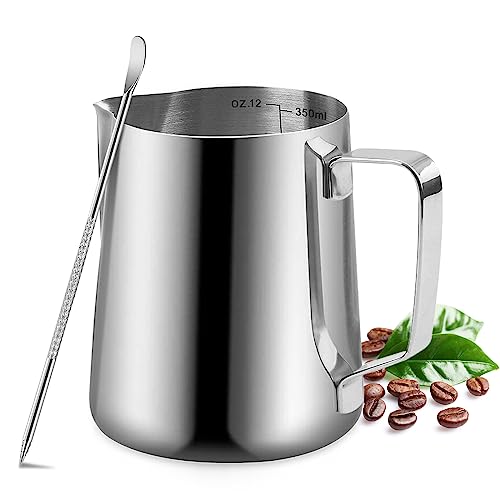
Milk Frothing Pitcher, 350ml/12oz Milk Frother Cup Stainless Steel Jug Steaming Pitcher, Milk Coffee Cappuccino Latte Art Barista Steam Pitchers Milk Jug Cup with Decorating Pen
Food Grade Material : This milk frothing pitcher is made of high-quality 304 stainless steel, which is rust…
As an affiliate, we earn on qualifying purchases.
As an affiliate, we earn on qualifying purchases.
Conclusion
Mastering milk texture isn’t just a detail—it’s the secret weapon that transforms your home espresso into a legendary, velvety masterpiece. When your milk’s silky smoothness and microfoam are perfectly balanced, your coffee becomes an unstoppable force of flavor that could rival any café’s! Don’t settle for anything less than perfection; with the right technique, you’ll create a milk wonderland that blows minds and elevates your entire coffee game to legendary status.

Subminimal NanoFoamer V2 Performance Milk Foamer | NEW Model Edition | Waterproof, Dual-Speed, Stainless Steel | Microfoamed Milk in 30 Seconds, Barista-Style Coffee Drinks Home
High-Performance Power: Cafe-quality microfoamed milk is now possible with a handheld tool! No need for a costly espresso…
As an affiliate, we earn on qualifying purchases.
As an affiliate, we earn on qualifying purchases.
Milk Frothing Pitcher 350ml/600ml/900ml/1500ml (12oz/20oz/32oz/50oz) Steaming Pitchers Stainless Steel Milk/Coffee/Cappuccino/Latte Art Barista Steam Pitchers Milk Jug Cup with Art Pen,12oz
Perfect Combination Of Milk Frothing Pitcher And Latte Art Pen: The milk frother jug can be used in…
As an affiliate, we earn on qualifying purchases.
As an affiliate, we earn on qualifying purchases.