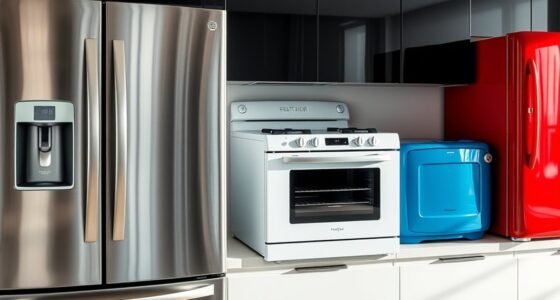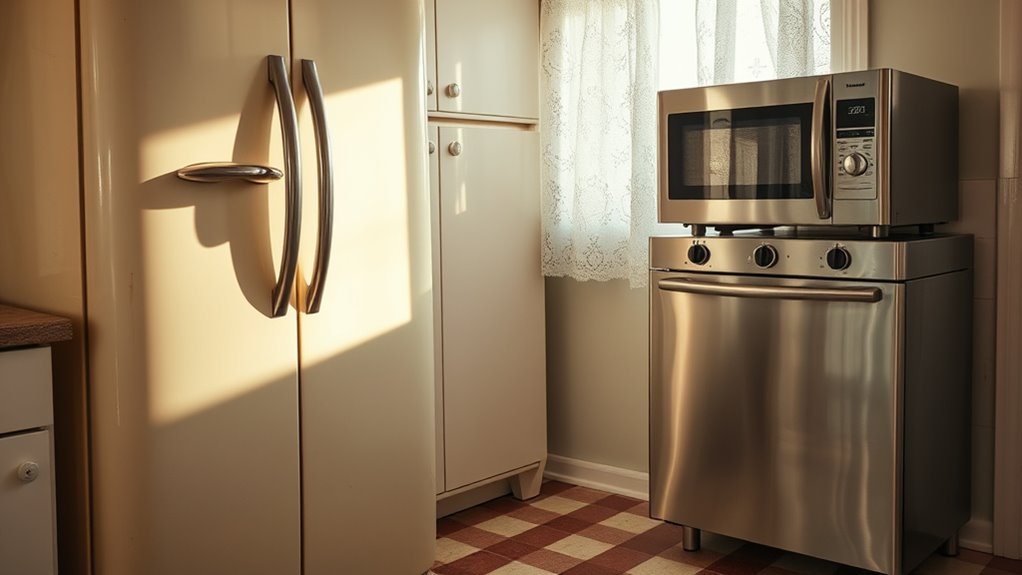

Many believe vintage appliances are more durable, but modern models often surpass older ones in energy efficiency, safety, and reliability. While older appliances may seem sturdier, they tend to consume more energy and lack current safety features, leading to higher long-term costs. Warranties and advanced technology now make new appliances a smarter choice. If you want to understand whether sticking with vintage or upgrading is better, keep exploring the facts.
Key Takeaways
- Older appliances are often more durable but may lack modern safety features and energy efficiency.
- Newer models typically consume less energy, reducing utility costs over time.
- Vintage appliances may be built with sturdier parts but can be costly to repair due to scarce parts.
- Modern appliances benefit from advanced technology, warranties, and environmental standards.
- The myth that old appliances are better ignores long-term savings, safety, and efficiency advantages of new models.
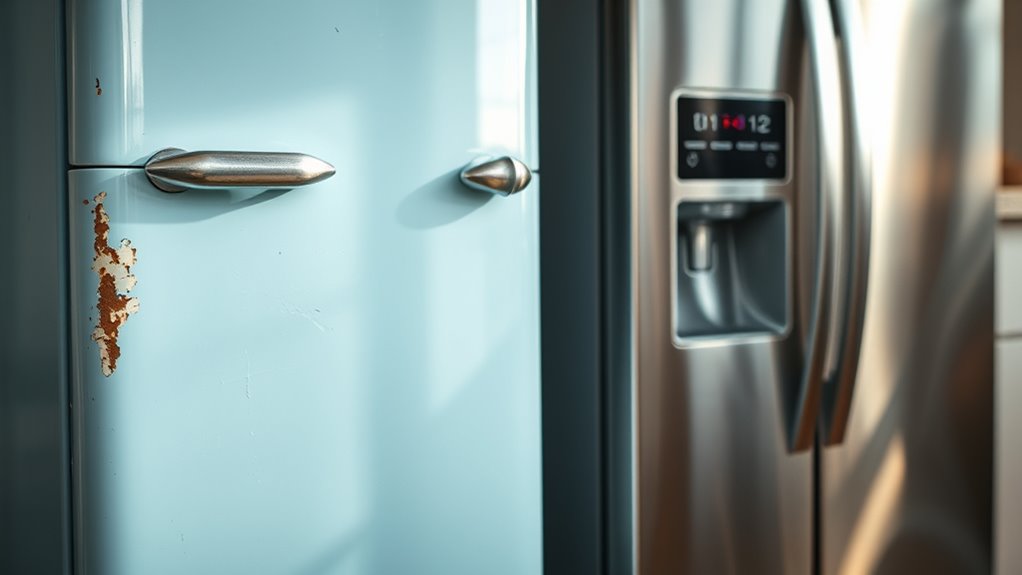
Many people believe that keeping old appliances is cost-effective, but the truth is more complex. While it might seem like holding onto your trusty refrigerator or washing machine saves money, newer models often outperform their predecessors in energy efficiency and durability. Modern appliances are designed with advanced technology that reduces energy consumption, meaning they use less electricity and can lower your utility bills over time. Older appliances, on the other hand, tend to be less efficient, consuming more power to perform the same tasks. This increased energy use can offset any initial savings from avoiding a replacement.
Durability is another factor that influences whether old appliances are better than new ones. Many vintage appliances were built to last, often with sturdier parts and fewer electronic components that can fail. If your old appliance is still functioning well, it might seem like a reliable choice. However, as time passes, wear and tear can lead to breakdowns, and repairs can become costly. Newer models, while sometimes made with lighter materials, benefit from modern engineering that enhances lifespan and reliability. Plus, they come with warranties, giving you peace of mind and protection against unexpected repairs.
You should also consider the potential drawbacks of keeping old appliances. For instance, they might not meet current safety standards, especially if they lack modern safety features. Additionally, older appliances can be less environmentally friendly, emitting more heat and using more resources during operation. Repairing an old appliance could also become less economical if parts are difficult to find or expensive. Although it might seem like a good idea to hold onto something familiar, these hidden costs can add up over time.
Switching to a new appliance might involve an upfront investment, but it often pays off in the long run. Newer appliances are designed to be more energy-efficient, which means lower energy bills and a smaller carbon footprint. They typically incorporate better safety features and improved technology that can make daily chores easier and more reliable. While some old appliances can still be useful, the advancements in energy efficiency and durability in new models make them an attractive option. If you want to save money, reduce environmental impact, and enjoy the latest technology, upgrading might be the smarter choice. Remember, the idea that “they don’t make ’em like they used to” isn’t entirely true—modern appliances are built to last and designed to save you money and energy over time. Additionally, modern appliances are often more environmentally friendly due to stricter regulations and improved manufacturing practices.
Top picks for "applianc better ones"
Open Amazon search results for this keyword.
As an affiliate, we earn on qualifying purchases.
Frequently Asked Questions
How Long Do Vintage Appliances Typically Last?
Vintage appliances typically last 20 to 50 years, depending on maintenance and usage. You might face restoration challenges, but their aesthetic appeal often outweighs modern features. If you love preserving history, expect some repairs and updates to keep them running smoothly. Keep in mind, well-maintained vintage appliances can serve you reliably for decades, blending charm with functionality—just be prepared for occasional restoration efforts along the way.
Are Older Appliances More Energy-Efficient Than Modern Ones?
Older appliances generally aren’t more energy-efficient than modern ones. They tend to use more energy, which can increase your energy bills and environmental impact. Newer models feature advanced technology designed for energy savings, reducing your carbon footprint. If you’re looking to cut costs and be eco-friendly, upgrading to newer appliances makes sense. They may cost more upfront, but they save you money and help protect the environment over time.
What Safety Concerns Exist With Using Old Appliances?
Old appliances are like ticking time bombs, posing safety concerns due to hazardous materials and outdated safety standards. You risk electrical fires, shocks, or even toxic exposure from aging wiring, insulation, or components containing substances like asbestos or lead. These dangers make it essential to inspect, upgrade, or replace old appliances, ensuring your home’s safety and peace of mind. Don’t ignore these risks—they could cost you far more than replacing an appliance.
Can Old Appliances Be Repaired Cost-Effectively?
Yes, old appliances can often be repaired cost-effectively. Their appliance longevity usually means parts are still available, and repair costs tend to be lower compared to buying new. If you catch issues early, fixing them can extend their lifespan and save you money. Just keep in mind that some repairs might be more expensive than replacement, so weigh repair costs against the value and safety of your appliance.
Do Vintage Appliances Have Better Performance Than New Models?
You might find vintage appliances charming and reliable, offering a nostalgic appeal that many modern models lack. While they often boast superior appliance durability and vintage aesthetics, they may not perform as efficiently or safely as newer ones. If you value timeless design and sturdiness, vintage appliances could meet your needs. However, consider their limitations in energy efficiency and advanced features before making your choice, ensuring it suits your lifestyle.
Conclusion
You might think old appliances are better, but did you know they account for nearly 20% more energy use than modern ones? While vintage models can last longer, newer appliances often save you money on energy bills and come with improved safety features. So, the next time you consider replacing an old appliance, weigh the potential energy savings against the charm of the vintage. Ultimately, it’s about finding the right balance for your home and wallet.