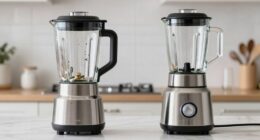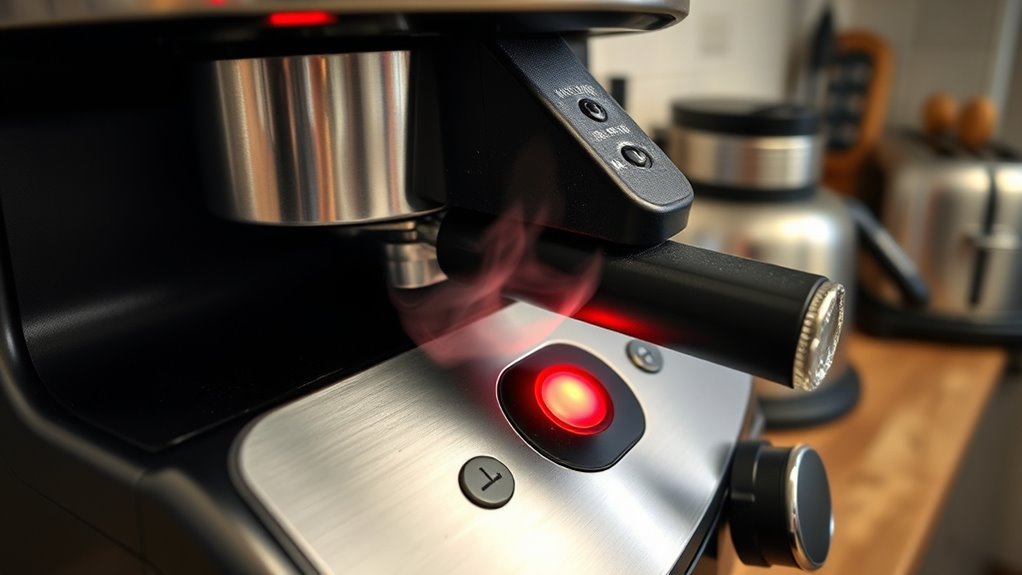

If your small appliance starts overheating, turn it off immediately, unplug it, and move it to a cool, stable surface away from flammable materials. Check for signs of damage, like frayed cords or burnt components, before using it again. To prevent overheating, keep vents clear, don’t overload, regularly clean it, and follow manufacturer guidelines. Staying attentive to these steps helps protect your home, and there’s more to contemplate for ongoing safety.
Key Takeaways
- Turn off and unplug the appliance immediately if overheating is detected to prevent fire hazards.
- Regularly clean vents, fans, and removable parts to reduce dust and debris buildup.
- Avoid overloading appliances and ensure they are placed on stable, heat-resistant surfaces.
- Inspect power cords for damage and replace them if frayed or worn to prevent electrical issues.
- Use appliances according to manufacturer instructions and perform routine maintenance to prevent overheating.
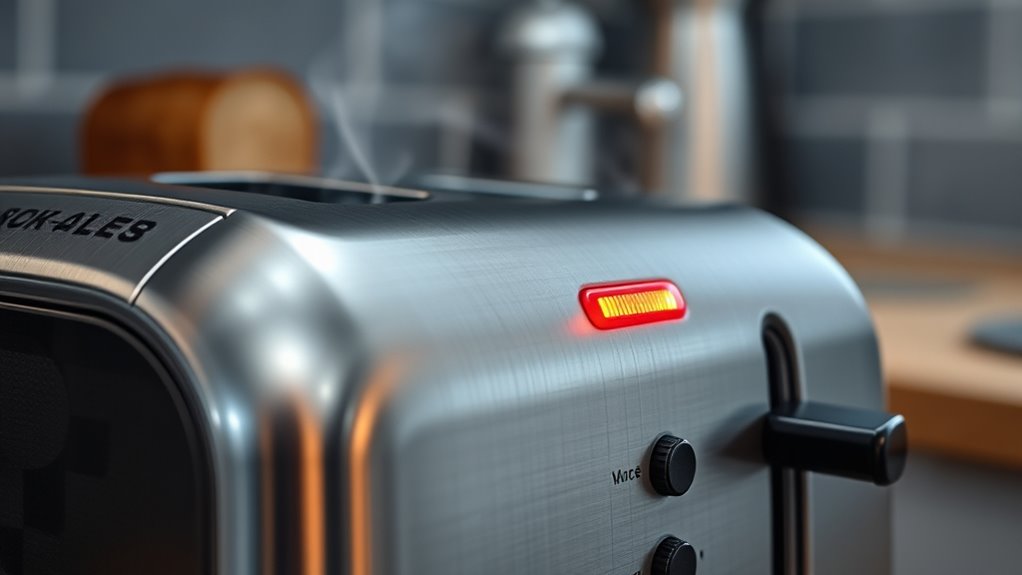
Have you ever noticed your small appliances getting unusually hot or even shutting off unexpectedly? If so, you’re not alone. Overheating can be a sign that something’s wrong, and ignoring it could lead to damage or even safety hazards. To keep yourself safe and your appliances functioning properly, it’s essential to understand the safety precautions you should take and the maintenance tips that can prevent overheating.
First, always prioritize safety precautions when using small appliances. Never leave them unattended while in use, especially on or near combustible surfaces. Make sure your appliance is placed on a flat, stable surface to prevent tipping or accidental contact with water or other liquids. Avoid overloading appliances like toasters or coffee makers, as this increases the risk of overheating. Keep the ventilation areas clear—blockages in vents or air intake openings trap heat inside, which can cause the appliance to overheat and shut off unexpectedly. Regularly inspecting power cords for damage or fraying is crucial; damaged cords can cause short circuits and heat buildup. If you notice any burning smells, sparks, or smoke, turn off the appliance immediately and unplug it to prevent fire hazards. Remember, safety precautions aren’t just about avoiding immediate danger—they also extend to routine maintenance, which is key to preventing overheating in the long run.
Performing regular maintenance tips can considerably extend the lifespan of your small appliances and keep them running safely. Clean your appliances frequently, especially parts that accumulate dust, grease, or food debris. For example, cleaning lint filters in toasters or vacuum attachments prevents blockages that can trap heat. Descaling appliances like coffee makers or kettles helps prevent mineral buildup that could interfere with their normal operation and cause overheating. Check vents and cooling fans; dust and dirt can clog these components, reducing airflow and causing the appliance to overheat. Ensuring proper ventilation is also important—ventilation considerations can help prevent heat buildup inside appliances. Always follow the manufacturer’s instructions for maintenance, and don’t neglect routine inspections. If an appliance’s safety features include automatic shut-off or thermal fuses, test them periodically to confirm they function correctly. Keeping your appliances well-maintained not only reduces the risk of overheating but also improves their efficiency and safety.
Top picks for "small applianc overheat"
Open Amazon search results for this keyword.
As an affiliate, we earn on qualifying purchases.
Frequently Asked Questions
Can Overheating Cause Permanent Damage to My Appliance?
Overheating can cause permanent thermal damage to your appliance, affecting its performance and lifespan. If you ignore overheating signs, you risk reducing your appliance’s longevity and facing costly repairs or replacements. To protect your appliance, always follow manufacturer guidelines, keep vents clear, and avoid overloading. Taking these precautions helps prevent thermal damage and guarantees your appliance stays functional and efficient for years to come.
How Often Should I Clean My Small Appliances to Prevent Overheating?
Think of your small appliances as plants needing regular care. You should clean them at least once a month to prevent overheating. Follow a consistent cleaning schedule and maintenance tips like removing dust and lint from vents and blades. This routine keeps your appliances running smoothly, avoiding the buildup that causes overheating. Staying attentive to these maintenance tips guarantees your appliances stay healthy and efficient for years to come.
Are There Specific Safety Features to Look for in Appliances?
Look for appliances with safety features like overheating protection, which automatically shut off the device when it gets too hot. You should also check for features such as auto shut-off, thermal cutoffs, and cool-touch exteriors to enhance safety. Prioritizing these safety features helps prevent overheating and reduces the risk of accidents. Always read product descriptions and user reviews to guarantee your appliance has reliable overheating protection before purchasing.
What Is the Typical Lifespan of a Small Appliance?
Your small appliance typically lasts around 3 to 5 years, but its durability depends on usage and maintenance. Like a well-oiled machine, proper care can extend its lifespan. Factors such as frequency of use, quality of components, and how well you clean it play a big role. To get the most out of your appliance, follow the manufacturer’s guidelines and avoid overloading or misusing it.
Should I Replace an Appliance That Frequently Overheats?
You should consider appliance replacement if it frequently overheats, as ongoing overheating poses serious risks, including fire hazards and damage. Ignoring these signs can lead to costly repairs or accidents. If your appliance continues to overheat despite troubleshooting, replacing it is the safest choice. Prioritizing safety helps prevent overheating risks and guarantees your home remains protected. Don’t delay—invest in a new appliance to keep your environment safe and efficient.
Conclusion
Remember, when your small appliances start overheating, it’s a sign to act before things get out of hand. Regular maintenance and mindful use can keep your devices running smoothly and prevent mishaps. Don’t ignore the warning signs—they’re your first line of defense. Sometimes, you have to face the music and address issues early, or you risk playing with fire. Stay vigilant, take precautions, and your appliances will serve you well without burning out.