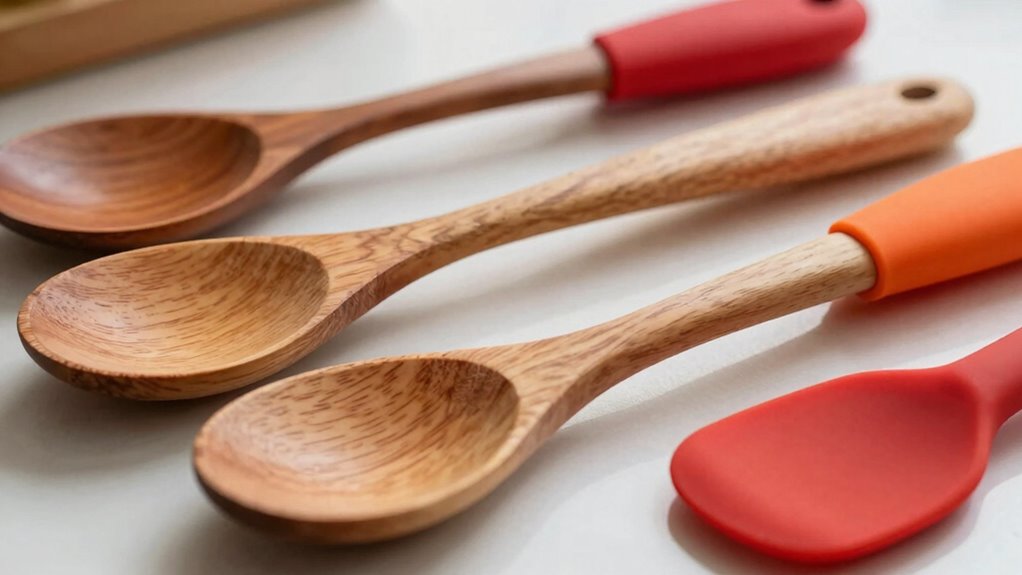

Choosing between wooden spoons and silicone tools changes your kitchen’s look, feel, and maintenance. Wooden spoons add rustic charm and develop a patina, giving a cozy, traditional vibe, but they need careful cleaning and oiling. Silicone tools are sleek, colorful, heat-resistant, and easy to clean, perfect for a modern or minimalist style. Your choice impacts both ambiance and practicality—continue exploring to discover which suits your cooking and decorating preferences best.
Open a free Amazon Business account
Business pricing, bulk buying and tax-exempt orders.
As an affiliate, we earn on qualifying purchases.
Key Takeaways
- Wooden spoons offer a rustic look and develop a patina, while silicone tools provide a sleek, modern appearance.
- Silicone tools withstand higher temperatures and are more heat-resistant than wooden spoons.
- Wooden utensils require regular oiling and hand washing; silicone tools are dishwasher safe and low-maintenance.
- Wooden spoons are ideal for traditional decor; silicone tools suit contemporary, minimalist kitchens.
- Silicone tools resist stains and odors, maintaining hygiene and longevity better than wooden spoons.
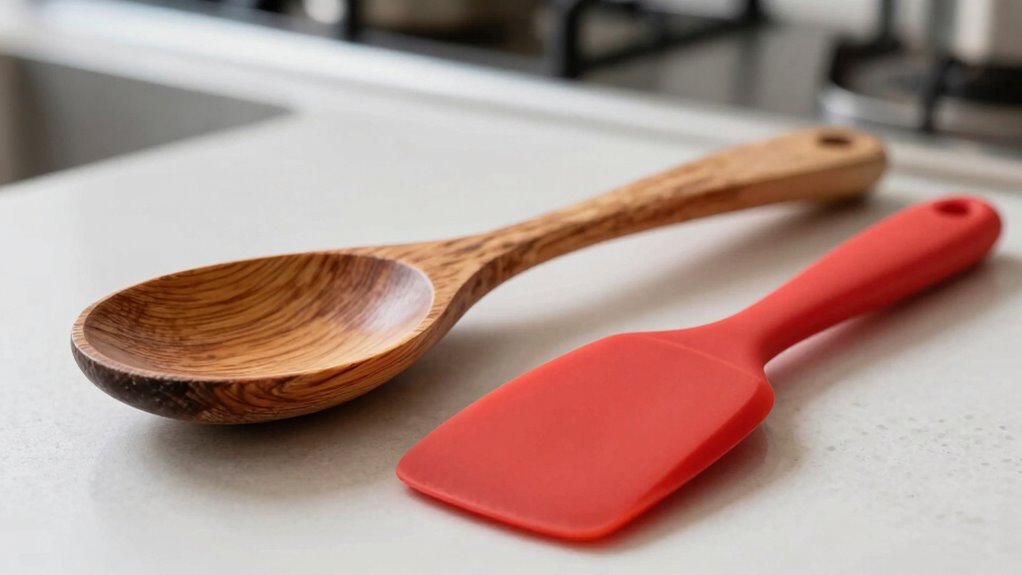
When choosing between wooden spoons and silicone tools, understanding their differences can help you make the best decision for your kitchen. Both options have unique qualities that impact your cooking experience, especially when it comes to kitchen aesthetics and heat resistance. Wooden spoons bring a warm, rustic charm to your space. Their natural appearance adds a cozy, traditional touch to any kitchen, blending seamlessly with other wooden utensils or farmhouse decor. They tend to age gracefully, developing a patina that many chefs find appealing over time. Silicone tools, on the other hand, offer a sleek, modern look that can elevate your kitchen’s style. Their vibrant colors and smooth finishes make them stand out, giving your cooking area a contemporary vibe. If aesthetic appeal matters to you, silicone tools provide a versatile, colorful array that can complement modern or minimalist kitchens with ease.
Heat resistance is another critical factor to weigh. Wooden spoons are naturally heat resistant, making them excellent for stirring hot dishes without melting or warping. They won’t conduct heat as much as metal utensils, so you can comfortably hold and use them even when cooking over high heat. However, they do require proper care; prolonged exposure to moisture can cause cracking or mold if not dried properly. It’s also important to note that proper maintenance** can extend the lifespan of wooden utensils and prevent issues like bacteria growth. Wooden utensils can also be affected by moisture exposure, which highlights the need for careful cleaning and storage. Regularly applying food-safe oil can help maintain their appearance and prevent drying out, which is an essential part of wooden utensil care. Additionally, proper cleaning and storage are crucial for preventing bacterial growth, emphasizing the importance of hygiene in kitchen tools. Silicone tools excel in heat resistance as well, with most capable of withstanding temperatures up to 600°F or more. This makes them highly durable for high-temperature cooking, such as stir-frying or grilling. Silicone also won’t absorb odors or stains, which keeps them looking new longer. Their flexibility allows for easy scraping of bowls and pots, and they’re often dishwasher safe, simplifying cleanup. Wooden spoons, while heat resistant, aren’t quite as versatile when it comes to cleaning and maintenance. You need to hand wash and dry them thoroughly to prevent damage, whereas silicone tools typically require less fuss. Additionally, natural materials** like wood can develop bacteria if not properly cared for, emphasizing the importance of proper maintenance. Silicone tools usually resist such issues, making them more hygienic in everyday use.
As an affiliate, we earn on qualifying purchases.
Frequently Asked Questions
Are Silicone Tools Safer for Non-Stick Cookware Than Wooden Spoons?
Yes, silicone tools are safer for non-stick cookware than wooden spoons. Silicone offers better heat resistance and material durability, meaning they won’t melt or warp at high temperatures. Unlike wooden spoons, silicone tools won’t scratch or damage your non-stick surface. Plus, they’re easy to clean and maintain. Overall, silicone tools protect your cookware better and last longer, making them a smarter choice for gentle, heat-resistant cooking.
How Do Wooden Spoons Impact the Flavor of Food?
Imagine you’re in a vintage kitchen, stirring your stew with a wooden spoon. You’ll notice that wooden spoons don’t impact the flavor much; they help preserve the wooden aroma, which adds a subtle, natural taste to your food. Unlike metal or plastic, wooden spoons don’t transfer flavors or cause reactions, so your dishes stay true to their original flavor. They’re excellent for flavor preservation and maintaining that authentic, rustic feel.
Can Silicone Tools Withstand High Cooking Temperatures?
Yes, silicone tools can withstand high cooking temperatures because of their excellent heat resistance and material durability. You can use them safely on hot pans or grills without worrying about melting or warping. Silicone’s flexible yet sturdy nature makes it ideal for stirring, flipping, and serving. Just make certain you check the temperature limits printed on your utensils to avoid damage, but generally, silicone tools handle up to 450°F or more.
Do Wooden Spoons Require More Maintenance Than Silicone Tools?
Like tending a delicate garden, you’ll find wooden spoons demand more care than silicone tools. They’re prone to cracking, warping, and absorbing odors, raising durability concerns. Plus, their aesthetic charm fades if not maintained properly, requiring regular oiling to keep their warm glow. Silicone tools, by contrast, stay pristine with minimal upkeep, offering a low-maintenance alternative that preserves your kitchen’s sleek look without sacrificing function.
Which Tools Are More Environmentally Friendly Overall?
Silicone tools are generally more environmentally friendly overall because they’re made from non-biodegradable materials, whereas wooden spoons are crafted from biodegradable materials and renewable resources. You’ll find wooden spoons decompose naturally, making them a better choice for reducing waste. Silicone tools last longer and can be reused many times, but they’re not biodegradable. So, if you prioritize sustainability, wooden spoons are the more eco-conscious option.
As an affiliate, we earn on qualifying purchases.
Conclusion
In the end, choosing between wooden spoons and silicone tools boils down to your style and needs. Wooden spoons bring that timeless charm, perfect for a cozy kitchen, while silicone tools offer modern convenience and versatility. Just like a trusty sword in a knight’s arsenal, each has its place. So, whether you’re channeling your inner medieval chef or embracing the future, pick what makes your cooking journey more fun and functional. Cheers to making every meal legendary!
As an affiliate, we earn on qualifying purchases.
dishwasher safe silicone kitchen tools
As an affiliate, we earn on qualifying purchases.
As an affiliate, we earn on qualifying purchases.
NFL season / tailgating Picks
team gear
As an affiliate, we earn on qualifying purchases.