
TL;DR

Get kitchen staples and gadgets delivered free with Prime
- Fast, free delivery on millions of items
- Prime Video, Amazon Music and more included
- Member-only deals all year
A Good Housekeeping report describes “anti-algorithm” tablescapes as eclectic, personal table settings that favor a coherent mood over a perfectly matching look. Event planners suggest starting with items already at home, adding thrifted or borrowed pieces, and including an unexpected detail. The approach is design advice, not a formal standard or a claim that any one style is better.
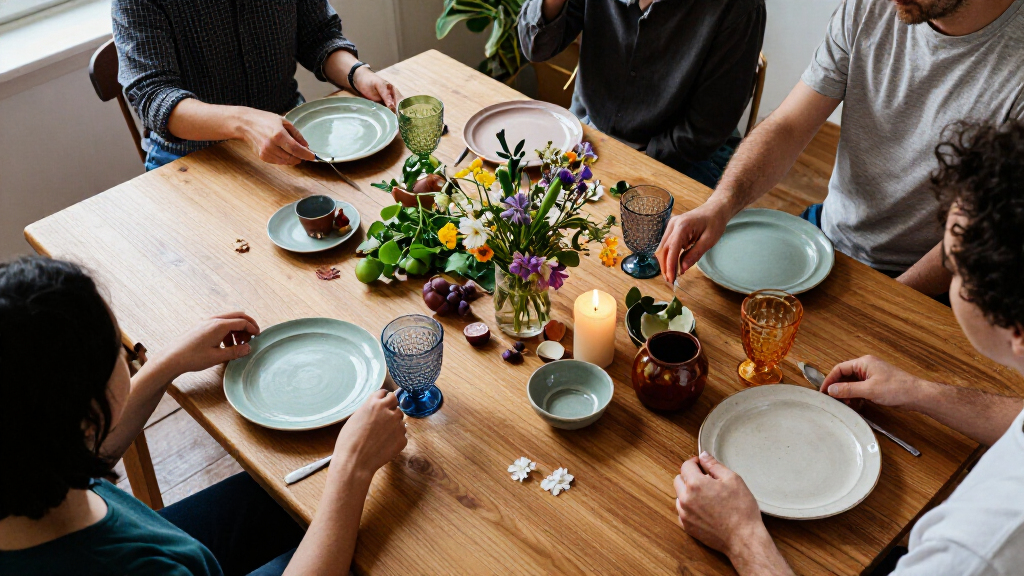
A Good Housekeeping report outlines how hosts can create so-called “anti-algorithm” tablescapes: eclectic settings built around personal taste rather than a matching set or a look designed for social media. Event planners quoted in the report recommend combining household pieces, vintage finds and unexpected accents, offering hosts a way to make a table feel individual without buying an entirely new collection.
The label refers to a design approach, not a strict set of rules. Instead of coordinating every plate, glass and decoration, hosts can combine items that support a shared mood or story. The report’s example pairs blue-and-white porcelain, amber glassware and antique brass candlesticks: the pieces do not match, but may contribute to a warm, traveled feel.
Amos Gott, chief event architect at AmosEvents, says people are tired of tables that appear to have been assembled by a search engine. He describes the appeal as bringing character back and says a good table can feel like a biography rather than a catalog. Those are his views on the trend, not a measured assessment of how hosts or guests respond to it.
Event planner Emily Reno advises hosts to shop their own homes first, taking stock of dishes, glassware, candles and seasonal decorations that might work in a new combination. For extra pieces, she suggests thrift stores and borrowing from friends or relatives. Morgan Montgomery, event planner and co-owner of Paisley & Jade, recommends adding an unexpected object, such as a small tabletop lamp, to bring a distinct accent and softer lighting.
A More Personal Place Setting
The advice matters to hosts who feel pressure to reproduce polished table settings seen in social feeds. The report offers a lower-pressure alternative: focus on whether objects belong together in a story, not whether they come from the same collection. That can make hosting feel more personal and gives existing belongings a role beyond their usual use.
There may also be a practical benefit. Reusing, borrowing and buying secondhand can reduce the need to purchase a full matching set for one gathering. The report does not quantify potential savings or establish that this approach is less expensive in every case, but it gives readers concrete ways to start with what they already have.
Products Worth Considering

KitchenAid 5.5-Qt Bowl-Lift Stand Mixer, Porcelain White (KSM55SXXX)

Le Creuset Enamemed Cast Iron Oval Dutch Oven, 5 qt., White/Crucible

Le Creuset Enameled Cast Iron Round Bread Oven, 9.5-Inch, Cerise
As an affiliate, we earn on qualifying purchases.
From Coordinated Sets to Collected Pieces
The Good Housekeeping report frames the style as a response to highly coordinated table settings and the influence of social-media inspiration. It says event planners and designers are increasingly championing a more eclectic look. The supplied material does not identify a specific launch, survey, or industry-wide measurement behind that description, so the trend is best understood here as a design idea discussed by the publication and its interviewees.
The suggested method is straightforward: choose a mood rather than a matching set, gather items from home, then consider thrifted or borrowed additions. Finish with a detail that gives guests something to notice, such as an inherited platter, an unusual vase or a decorative lamp. The report does not prescribe a particular color scheme, budget or number of mismatched pieces.
“People are exhausted by tables that look like they were assembled by a search engine.”
— Amos Gott, chief event architect at AmosEvents
How Far the Trend Has Spread
The report offers expert opinions and design suggestions, but the supplied material contains no survey data, sales figures or broader industry research showing how widely the style is being adopted. It also does not establish that social-media users or hosts generally prefer eclectic tables to coordinated ones. “Anti-algorithm” is used as a descriptive label, not as a formally defined design category.
Whether a mix of pieces looks cohesive will depend on the objects and the host’s taste. The report presents examples and recommendations, not tested rules or a guarantee that a particular combination will suit every gathering.
Try a Table with What You Own
The report does not announce a scheduled event or a next industry milestone. For hosts interested in the idea, its suggested next step is to gather dishes, glassware, linens and decorative pieces already on hand, then arrange them around a chosen mood. Add borrowed or thrifted items only if the table needs them, and use one unexpected accent to give the setting a focal point.
Readers can judge the result by whether the pieces feel connected and practical for their gathering, rather than by how closely the setting resembles an online image. The publication’s advice remains a design option; no wider change in hosting habits is confirmed in the supplied report.
Key Questions
What is an “anti-algorithm” tablescape?
It is an eclectic table setting built around personal taste and a shared mood, rather than a perfectly matching set or a look made to imitate social-media trends.
How can I start without buying anything?
Take stock of plates, glassware, linens, candles and decorations already at home. Try combining them in a new way around one mood, such as warm, colorful or collected.
Do the pieces have to match?
No. The planners quoted by Good Housekeeping suggest asking whether the items belong in the same story, rather than whether they coordinate exactly.
Where can I find extra pieces?
The report suggests looking at thrift stores or borrowing from friends and family, particularly when you need additional place settings. It does not specify a budget or guarantee that secondhand items will be available.
What can make the table feel more distinctive?
An inherited platter, unusual vase or tabletop lamp can add an unexpected detail. The report’s examples are suggestions, not required elements of the style.
Source: goodhousekeeping.com