
🔍 Read the full analysis: Ossobuco: The Braise That Deserves Your First Cool Evening on Mad Tasting

Get kitchen staples and gadgets delivered free with Prime
- Fast, free delivery on millions of items
- Prime Video, Amazon Music and more included
- Member-only deals all year
TL;DR
Ossobuco, a traditional Milanese veal shank braise, is ideal for the first cool evening. It involves slow braising for 2-3 hours and pairing with saffron risotto and gremolata. This dish rewards patience and careful preparation.
As temperatures drop and the first cool evening arrives, ossobuco emerges as an ideal dish to welcome the season. This slow-braised Milanese specialty, made from cross-cut veal shanks, offers a rich, comforting meal perfect for closing windows and embracing cozy nights. Its preparation is rooted in tradition, emphasizing patience and careful technique, making it a rewarding choice for home cooks seeking a hearty, flavorful dish.
Ossobuco is a dish defined by its specific cut: cross-cut veal shanks, approximately 1½ to 2 inches thick, with bone and marrow intact. The key to its richness lies in slow braising over low heat for two to three hours, which transforms the collagen-rich meat into tender, gelatinous goodness. The marrow inside the bone adds depth of flavor, enriching the sauce as it softens during cooking.
Traditionally associated with Milan and Lombardy, ossobuco is paired with saffron risotto alla Milanese and topped with gremolata— a mixture of lemon zest, parsley, and garlic. The dish’s origins trace back to regional thrift, utilizing inexpensive cuts of veal and transforming them into a luxurious, hearty meal through patient cooking. Modern variations may include tomato in the sauce, which brightens the flavor, but the classic version emphasizes a wine-driven, marrow-rich profile.
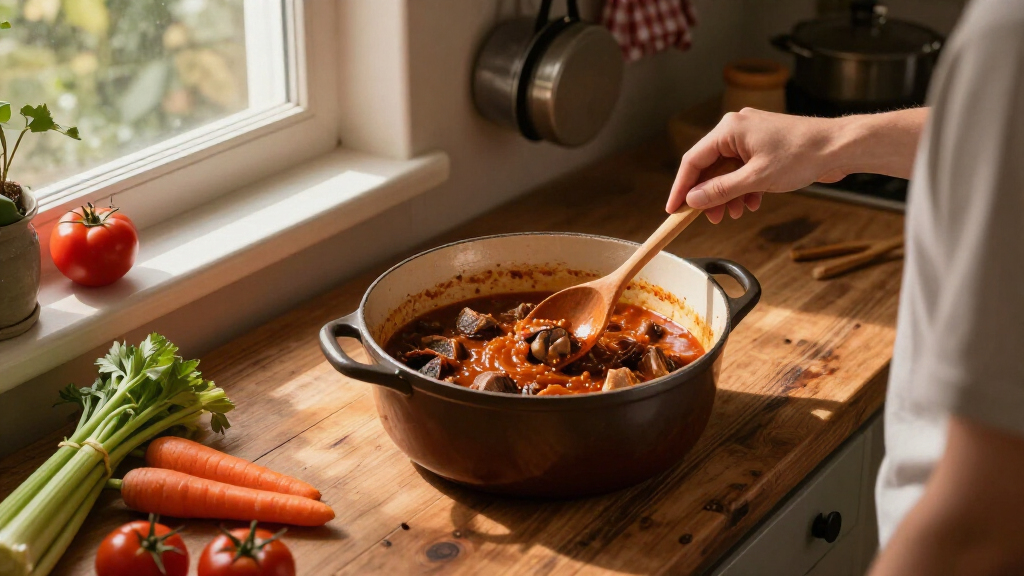
Cooking ossobuco involves a straightforward process: seasoning and flouring the shanks, browning them deeply in oil, then braising with wine, stock, and vegetables in a covered pot at a gentle simmer. The key is low, moist heat over a long period, allowing the collagen to dissolve and the marrow to enrich the sauce. The final touch is adding gremolata just before serving to provide a fresh, citrusy contrast to the richness.
A Milanese welcome to cooler nights
Ossobuco: The Braise That Deserves Your First Cool Evening
Cross-cut veal shanks, a gentle wine braise, and a bright finish of gremolata turn patient cooking into a deeply comforting seasonal meal.
01 / Why it fits the season
Comfort with a bright edge
A cool evening calls for warmth and depth. Ossobuco answers with a rich braise, balanced by aromatic rice and a lively citrus-herb topping.
THE CUT
Marrow at the center
Cross-cut veal shanks keep the bone and marrow in place. As the meat braises, collagen softens and the marrow lends body to the sauce.
THE BALANCE
Rich meets lively
Saffron risotto alla Milanese catches the braising juices. Gremolata—lemon zest, parsley, and garlic—cuts through with freshness.
THE REWARD
Patience made tangible
Season, brown, then let gentle heat do the work. The result feels celebratory while relying on a straightforward, time-tested method.
02 / The cooking sequence
Build flavor, then let time work
Keep the pot covered at a gentle simmer. The goal is tender meat and a sauce enriched by the shanks, not a rapid boil.
Season & flour
Season the shanks and dust lightly with flour to help the surface brown.
Brown deeply
Sear in oil until richly colored on both sides; work in batches if needed.
Braise gently
Add wine, stock, and vegetables. Cover and cook over low heat for 2–3 hours.
Finish fresh
Spoon gremolata over the dish just before serving for a citrusy lift.
Watch the texture: shanks vary in thickness, so use tenderness as your guide. Beef shanks can work too, with a deeper flavor and often a longer braise.
03 / Milan & Lombardy
A humble cut, a regional classic
The name means “bone with a hole,” pointing to the marrow-bearing center that gives the dish its character.
ORIGINS
Resourceful cooking
In Lombardy, economical veal shanks became a luxurious, satisfying meal through patient braising. The dish reflects a regional tradition of making the most of local ingredients.
THE TABLE
Rice, saffron & herbs
Rice from the Po Valley and prized saffron helped make risotto alla Milanese a natural partner. Gremolata brings a fresh counterpoint to the marrow-rich sauce.
04 / Recipe choices
Classic profile, modern variations
Recipes differ on tomato and the choice of shank. Both decisions change the final flavor and cooking time.
| Choice | What it brings | Good to know |
|---|---|---|
| Wine & marrow | Classic Milanese emphasis; deep, savory sauce | ✓ Traditional profile |
| Tomato added | More brightness and acidity | ~ Common modern variation |
| Veal shanks | Traditional tenderness and flavor | ✓ Allow 2–3 hours |
| Beef shanks | Deeper flavor; different texture | ~ May need more time |
There is no single preference across every cook or recipe. Choose the profile you enjoy, then braise gently until the meat is tender.
05 / Timing & planning
Make the evening easy
Most of the work happens in the pot. Prep the aromatics and sides while the shanks braise slowly.
Make it a day ahead if convenient: the flavors deepen overnight. Reheat gently to help preserve the meat’s tenderness.
06 / Questions at the stove
Quick answers for home cooks
Keep the core method steady and adjust the ingredients to suit your table.
Can I use beef shanks?
Yes. They bring a deeper flavor and may need a longer braise. Cook until tender rather than relying on the clock alone.
Is tomato traditional?
Many classic Milanese versions omit it and focus on wine and marrow. Modern recipes often add tomato for brightness.
What sides work well?
Saffron risotto alla Milanese is the classic choice. Polenta or mashed potatoes also soak up the sauce beautifully.
Can I prepare it ahead?
Yes. Make it a day in advance, then reheat gently; resting gives the flavors time to come together.
Why Ossobuco Is the Ideal Dish for Cooler Evenings
Ossobuco offers a combination of simplicity and sophistication that makes it perfect for the first cool night. Its slow-cooked, tender meat and rich sauce provide comfort and warmth, aligning with the seasonal shift toward heartier foods. Additionally, the dish’s regional roots and traditional pairings—like saffron risotto—highlight Italian culinary heritage, making it a meaningful and satisfying choice for home cooks and diners alike.
Its preparation encourages patience and attention to detail, rewarding cooks with a dish that tastes like it’s been simmering all day, even if it takes only a few hours. The pairing with gremolata and saffron rice also emphasizes balance—richness contrasted with brightness—making it a well-rounded, memorable meal. As a cultural icon of Milanese cuisine, ossobuco embodies the comfort and elegance of Italian winter fare, making it a dish worth mastering as the season turns cooler.
As an affiliate, we earn on qualifying purchases.
Historical and Culinary Context of Ossobuco
Ossobuco has roots in Lombardy, particularly Milan, where it originated as an economical way to transform inexpensive veal shanks into a luxurious, satisfying dish. Its name, meaning ‘bone with a hole,’ describes the cut’s characteristic appearance and highlights the importance of marrow in flavor development. Historically, the dish was a way to make use of the byproducts of dairy and veal production, reflecting regional thrift and resourcefulness.
The pairing with saffron risotto and gremolata developed over centuries, influenced by trade routes and local ingredients. Saffron, arriving via trade, became a prized addition to Milanese cuisine, while rice paddies in the Po Valley made risotto a staple. The dish’s evolution from humble peasant fare to a celebrated regional specialty underscores its cultural significance and culinary adaptability. Today, chefs and home cooks continue to honor these traditions, emphasizing slow cooking and regional pairings.
As an affiliate, we earn on qualifying purchases.
Current Variations and Debates in Ossobuco Preparation
While the traditional recipe emphasizes a wine-based, marrow-rich braise without tomato, many modern versions incorporate tomato for brightness. It is not yet clear which version is more authentic or preferred among regional cooks and chefs. Additionally, some debate exists over the use of beef versus veal shanks, with beef offering a deeper flavor but differing in texture and cooking time. The ideal cooking duration can also vary depending on the cut and thickness of the shank, and preferences for the level of marrow richness vary among diners.
As an affiliate, we earn on qualifying purchases.
Next Steps for Home Cooks and Enthusiasts
Home cooks are encouraged to try making ossobuco during the upcoming cooler evenings, following the outlined steps for braising and pairing. Experimenting with the addition of tomato or sticking to the classic wine and marrow version can help determine personal or regional preferences. Additionally, exploring traditional accompaniments like saffron risotto and gremolata will enhance the authenticity of the dish. As the season progresses, more chefs and food writers may share variations, but the core process remains consistent: patience, low heat, and careful flavor balancing.
As an affiliate, we earn on qualifying purchases.
Key Questions
Can I use beef shanks instead of veal for ossobuco?
Yes, beef shanks are a common substitute. They typically require a slightly longer braising time and have a deeper flavor, but they can produce excellent results.
Is tomato sauce traditional in ossobuco?
Traditional Milanese ossobuco often omits tomato, focusing on wine and marrow. Many modern recipes include tomato for brightness, but both are acceptable depending on your taste preferences.
What sides go well with ossobuco?
Saffron risotto alla Milanese is the classic pairing, but polenta or mashed potatoes also work well to soak up the sauce.
How long does it take to cook ossobuco properly?
Plan for about 2 to 3 hours of slow braising at low temperature to achieve tender, flavorful meat and a rich sauce.
Can I prepare ossobuco ahead of time?
Yes, it can be made a day in advance. The flavors deepen overnight, and reheating gently preserves the tenderness and richness.
Source: Mad Tasting
Halloween Picks
halloween
As an affiliate, we earn on qualifying purchases.