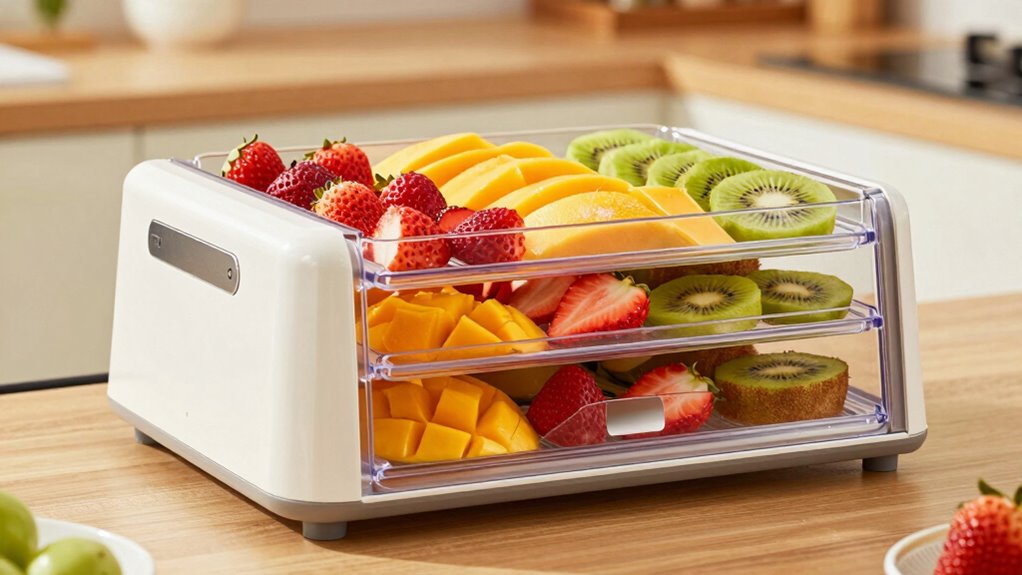

A dehydrator is a handy kitchen appliance that removes moisture from foods like fruits, herbs, and vegetables to extend their shelf life and lock in nutrients. It uses low, controlled heat and even airflow to guarantee uniform drying without preservatives or additives. Dehydrators are energy-efficient and versatile, perfect for making snacks, herbal teas, or dried flowers. Want to discover how to get the most from your dehydrator? Keep exploring for all the tips!

Get kitchen staples and gadgets delivered free with Prime
- Fast, free delivery on millions of items
- Prime Video, Amazon Music and more included
- Member-only deals all year
Key Takeaways
- Dehydrators remove moisture from foods to extend shelf life and prevent spoilage, making them ideal for preserving fruits, herbs, and vegetables.
- They operate at low temperatures with even airflow, ensuring consistent drying and nutrient retention.
- Dehydrators are energy-efficient, cost-effective, and suitable for drying large batches without high electricity use.
- They are versatile, allowing for homemade snacks, fruit leathers, herbal teas, and dried flowers.
- Using a dehydrator promotes healthier, preservative-free foods with minimal environmental impact.
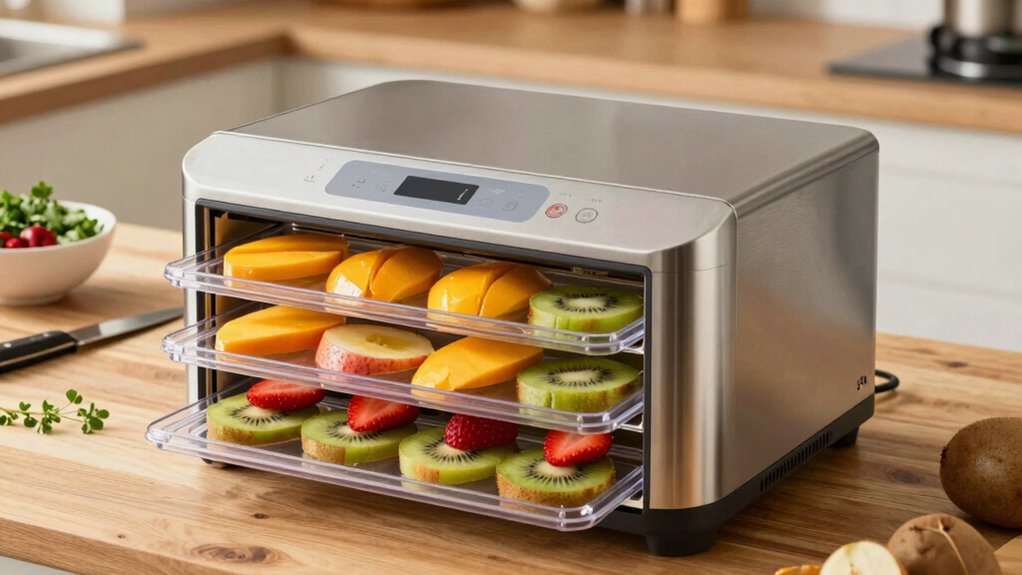
If you’re interested in preserving your favorite fruits, vegetables, or herbs, a dehydrator can be a game-changer in your kitchen. Dehydration is a simple yet effective method for food preservation, allowing you to extend the shelf life of your produce without relying on refrigeration or canning. When you dehydrate food, you remove most of the moisture, which inhibits bacterial growth and mold, keeping your snacks and ingredients fresh for months. This process not only helps reduce waste but also gives you control over what you consume, especially if you prefer organic or homemade options.
Dehydrators extend shelf life, reduce waste, and give you control over healthy, homemade snacks and ingredients.
One of the best benefits of using a dehydrator is its energy efficiency. Compared to traditional oven drying or other preservation methods, dehydrators use less electricity because they operate at lower temperatures and are designed for continuous, even airflow. This means you can dry large batches of food without worrying about high energy costs, making it an economical choice for home cooks who want to save money in the long run. Many models even include adjustable temperature controls and timers, which optimize power use and guarantee you don’t waste energy drying foods too quickly or at unnecessarily high temperatures.
Using a dehydrator is straightforward, and it gives you a lot of flexibility. You can experiment with different foods, from apple slices and herbs to jerky and fruit leathers. The process involves slicing your produce evenly, arranging it on the dehydrator trays, and setting the right temperature and time. Because dehydrators promote even airflow, your food dries uniformly, preventing spoilage and ensuring consistent results. Plus, since you’re in charge of the ingredients, you avoid preservatives and additives common in store-bought dried foods. Additionally, the high pressure capabilities of airless sprayers in painting can be likened to the consistent airflow in dehydrators, both promoting even results and efficiency.
Dehydrators are also versatile tools that can be used for more than just food preservation. They can help you create homemade snacks, craft herbal teas, or even dry flowers for decorative purposes. Proper temperature control is essential for maintaining the nutrients, flavors, and colors of your ingredients, and dehydrators are designed to provide this feature. This control also supports the use of natural filtration systems to keep the food safe and free from contaminants. Moreover, understanding the energy efficiency of dehydrators can help you make smarter choices, saving you money and reducing your environmental impact. And because they maintain lower temperatures, they help preserve the nutrients, flavors, and colors of your ingredients better than some high-heat methods.
In short, if you want a reliable, energy-efficient way to preserve foods while maintaining quality, a dehydrator is a smart investment. It simplifies food preservation, reduces waste, and gives you healthier, homemade options that last longer. Whether you’re drying herbs, fruits, or meats, a dehydrator makes it easy to enjoy your favorite flavors all year round.
food dehydrator for fruits and herbs
As an affiliate, we earn on qualifying purchases.
As an affiliate, we earn on qualifying purchases.
Frequently Asked Questions
How Long Does It Typically Take to Dehydrate Different Foods?
Dehydration timing varies based on food texture and thickness. Typically, fruits take 6 to 12 hours, while herbs need just 2 to 4 hours. Meats and thicker foods can take 8 to 24 hours. You’ll notice the food becomes leathery or crisp, signaling it’s done. Keep an eye on your dehydration process, and adjust the timing if needed to prevent over-drying or under-drying.
Can Dehydrators Be Used for Making Cheese or Yogurt?
You can’t use dehydrators for making cheese or yogurt directly because they’re designed for dehydration, not fermentation or pasteurization. However, they’re great for cheese dehydration, turning cheese slices into crispy snacks, and for yogurt drying, creating yogurt bark or snacks. Just make certain you set the right temperature and time, and you’ll successfully use your dehydrator for these creative cheese dehydration and yogurt drying projects.
Are There Safety Concerns With Long-Term Food Storage Using Dehydrators?
Yes, there are safety concerns with long-term food storage using dehydrators. You need to guarantee proper food safety by thoroughly drying foods to prevent mold, bacteria, or spoilage. Over time, storage longevity can decrease if foods aren’t kept in airtight containers or stored in a cool, dark place. Regularly check dried items for signs of moisture or mold, and consume within recommended timeframes to maintain safety and quality.
What Is the Best Way to Clean and Maintain a Dehydrator?
To clean and maintain your dehydrator effectively, follow simple cleaning routines after each use. Remove trays and wash them with warm, soapy water, then wipe down the interior with a damp cloth. Regular maintenance tips include checking for any buildup or residue, making sure vents are clear, and lubricating moving parts if needed. This keeps your dehydrator running efficiently, prolongs its lifespan, and ensures safe, healthy food storage.
How Energy-Efficient Are Home Dehydrators Compared to Other Preservation Methods?
Home dehydrators are quite energy-efficient compared to methods like canning or freezing, thanks to their low energy consumption. They use less electricity because they operate at lower temperatures and for shorter periods. This reduces environmental impact, making them a sustainable choice for food preservation. You’ll find that dehydrators not only save energy but also help minimize your carbon footprint, making them an eco-friendly option for your kitchen.
electric food dehydrator with adjustable temperature
As an affiliate, we earn on qualifying purchases.
As an affiliate, we earn on qualifying purchases.
Conclusion
Now that you’ve uncovered the secrets of dehydrators, you’re ready to set out on tasty, healthy adventures. Think of your dehydrator as a magic wand, transforming fresh ingredients into flavorful snacks and ingredients that last. With a little practice, you’ll master the art of preserving flavors and nutrients, turning everyday ingredients into culinary treasures. So, go ahead—grab your dehydrator and let your kitchen become a garden of endless, delicious possibilities!
homemade fruit leather dehydrator
As an affiliate, we earn on qualifying purchases.
As an affiliate, we earn on qualifying purchases.
As an affiliate, we earn on qualifying purchases.
Evergreen bestsellers Picks
bestsellers
As an affiliate, we earn on qualifying purchases.