Many believe ceramic cookware is fragile, but with proper care, it’s quite durable. It doesn’t automatically chip or crack easily, and high-quality options last for months or years if you avoid metal utensils and sudden temperature changes. Safely made from natural materials, ceramic coatings are generally safe when purchased from reputable brands. Misconceptions about their fragility or safety are common, but understanding the facts can help you make better use of your cookware—there’s more to uncover.
Key Takeaways
- Ceramic cookware is durable and not inherently fragile; proper handling extends its lifespan.
- Safety concerns are largely unfounded if purchased from reputable brands using safe materials.
- The myth that ceramic coatings quickly degrade is false; with proper care, they last many months or years.
- Using gentle utensils and avoiding sudden temperature changes helps preserve the non-stick surface.
- Ceramic coatings are made from natural materials and do not contain harmful chemicals like PFCs.
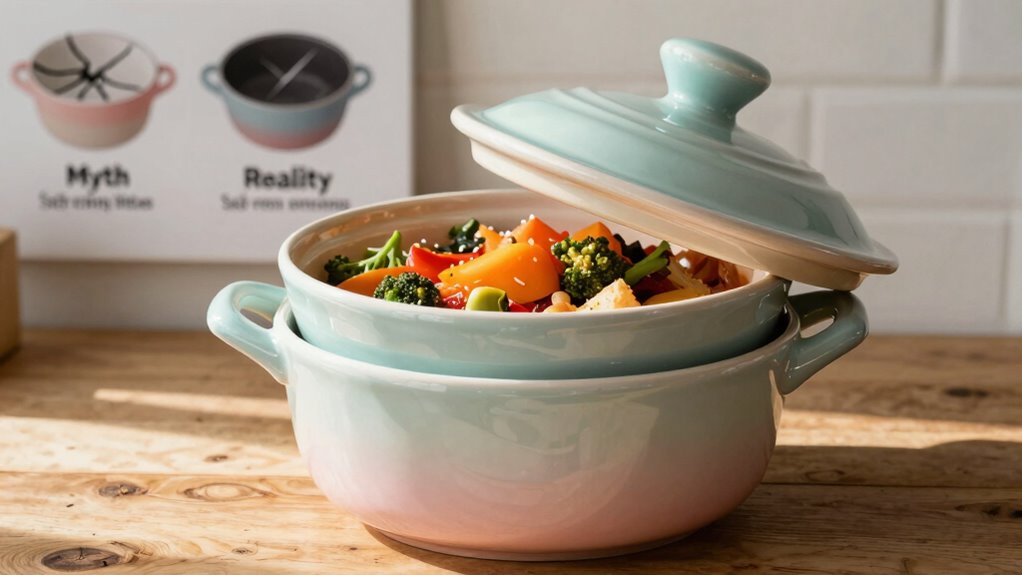
Ceramic cookware has gained popularity for its non-stick surface and eco-friendly appeal, but many myths about its safety and durability persist. One common concern revolves around the non-stick durability of ceramic pots and pans. You might have heard that ceramic coatings quickly degrade or chip, making them useless after just a few uses. While it’s true that ceramic coatings can wear over time, their durability largely depends on quality and care. High-quality ceramic cookware is designed to withstand regular use and can maintain its non-stick properties for many months or even years with proper handling. Avoiding metal utensils and using gentle cleaning methods help prolong the non-stick surface, ensuring you get the most out of your cookware. Proper fabric technology and manufacturing standards also play a significant role in enhancing the longevity of ceramic coatings. Additionally, advances in coating durability have improved the resilience of modern ceramic cookware, making it more resistant to everyday wear and tear. Proper temperature management during cooking is also crucial in preventing premature coating degradation.
Another widespread myth concerns chemical safety. Many skeptics claim that ceramic coatings are unsafe because they contain harmful chemicals or release toxins when heated. This perception stems from confusion around traditional non-stick coatings, like Teflon, which can release fumes at high temperatures. However, ceramic cookware is generally considered safer because it’s made with natural materials and doesn’t contain perfluorochemicals (PFCs). You can feel confident using ceramic cookware for everyday cooking, as it’s free from many of the chemicals associated with older non-stick options. Still, it’s important to buy from reputable brands, as some cheaper options may not adhere to safety standards or may have coatings that degrade prematurely.
Many people also believe that ceramic cookware is fragile and prone to cracking or chipping easily. While ceramic coatings are more delicate than stainless steel or cast iron, they’re not necessarily fragile if you treat them with care. Using gentle utensils, avoiding sudden temperature changes, and not dropping them considerably reduces the risk of damage. Proper storage—stacking with padding or using protective liners—further minimizes chipping. It’s a myth that ceramic cookware is inherently fragile; rather, its longevity depends on your handling and maintenance. Taking these precautions ensures your cookware remains in good condition over time.

T-Fal Ultimate Hard Anodized 12-Piece Ceramic Nonstick Cookware Set, Oven Safe Up to 400°F, Ceramic Pots and Pans Set, Frying Pans, Saucepan, Stockpot, Cooking Utensils, Stone
All You Need: Our 12 piece nonstick cookware set includes 8 inch and 10.5 inch frypans, a 12…
As an affiliate, we earn on qualifying purchases.
As an affiliate, we earn on qualifying purchases.
Frequently Asked Questions
Is Ceramic Cookware Safe for Non-Stick Cooking?
Yes, ceramic cookware is safe for non-stick cooking because it offers good non-stick durability without harmful chemicals. Unlike traditional non-stick pans, ceramic coatings typically don’t contain PFOA or PTFE, making them a safer choice for chemical safety. You can cook with confidence, knowing that ceramic cookware provides a reliable non-stick surface while minimizing exposure to potentially harmful substances. Just remember to avoid metal utensils to prolong its non-stick effectiveness.
How Long Does Ceramic Coating Typically Last?
Think of your ceramic coating like a delicate but resilient shield. Typically, it lasts around 5 years, but durability concerns depend on how well you maintain it. Proper coating maintenance, like gentle cleaning and avoiding metal utensils, extends its life. If you care for it as you would a treasured keepsake, your ceramic cookware can stay non-stick and beautiful, even as time passes, ensuring your cooking experience remains smooth and safe.
Can Ceramic Cookware Withstand High Oven Temperatures?
Yes, ceramic cookware can withstand high oven temperatures due to its excellent temperature resistance and heat durability. Typically, you can safely use ceramic pots and pans in ovens up to 450-500°F (232-260°C). Always check your specific cookware’s manufacturer instructions for maximum temperature limits, but generally, ceramic’s heat resistance makes it suitable for baking, roasting, and other high-heat cooking techniques without damage.
Is Ceramic Cookware Suitable for All Stove Types?
You’ll be amazed at how ceramic cookware can conquer all stove types—gas, electric, induction, you name it! Its material durability stands out, making it practically unbreakable on any cooktop. Plus, its aesthetic appeal turns your kitchen into a stylish haven. So, rest assured, ceramic cookware isn’t just a pretty face; it’s versatile and reliable for every stove, ensuring your cooking adventures are smooth and stunning.
Does Ceramic Cookware Emit Toxic Fumes When Heated?
Ceramic cookware generally doesn’t emit toxic fumes when heated, making it a safe choice for your kitchen. Unlike some non-stick pans, ceramic options release minimal chemical emissions, reducing health concerns. Additionally, ceramic cookware has a lower environmental impact because it’s free of harmful chemicals like PTFE and PFOA. As long as you avoid overheating, you can cook confidently without worrying about toxic fumes or negative environmental effects.

SENSARTE Nonstick Ceramic Frying Pan with Lid 8/9.5/10/11/12.5 Inch Omelet Pan Skillet, Free of Intentionally Added PFAS/PTFE Non-toxic Chef's Pan Induction Compatible Pan, Heat Resistant Handle
HEALTHY CERAMIC SKILLET – Made of natural ceramic coating, free of intentionally added PFOA, PTFE, PFAS, lead and…
As an affiliate, we earn on qualifying purchases.
As an affiliate, we earn on qualifying purchases.
Conclusion
Don’t let myths steer you wrong — ceramic cookware truly offers safe, non-stick cooking when you choose quality and care. Think of it like a trusted friend who’s been tested over time; just as you wouldn’t dismiss a friend’s genuine advice, trust the facts over fiction. With proper use, ceramic can be your reliable kitchen companion, helping you create delicious meals without worry. Embrace the truth, and cook confidently knowing you’re making the right choice.

CAROTE Silicone Cooking Utensils Set, Kitchen Utensils Set 10 Pcs for cooking, BPA Free Spatula Set with Heat Resistant Wood Handles for Nonstick Cookware (Cream White)
【Food Grade Silicone】Our silicone cooking utensils set uses food-grade silicone, BPA free, safety and healthy, you can use…
As an affiliate, we earn on qualifying purchases.
As an affiliate, we earn on qualifying purchases.

Pot and Pan Protectors, 6 Pack Pan Protectors in 3 Sizes, Pot Separator for Stacking, Anti-Slip Pan/Pot Dividers to Avoid Stratching or Marring, Protecting Pads for Glass/Ceramic Plates and Cookwares
【PERFECT PACK】Stop Wasting Money buying 12 packs pot dividers! 6 Packs is Enough for most families! Your Pan…
As an affiliate, we earn on qualifying purchases.
As an affiliate, we earn on qualifying purchases.