
When you see terms like “professional grade,” it often means the appliance is built with higher-quality materials, better durability, or enhanced features, but it may not necessarily be more efficient or suited for home use. Other buzzwords like “smart,” “energy-efficient,” or “high-performance” can help you understand what it offers. Recognizing these marketing terms can guide your choices, but knowing what truly matters guarantees you get the best value—so keep exploring for more insights.
Key Takeaways
- “Professional Grade” suggests higher durability, performance, or features similar to commercial appliances but isn’t regulated or standardized.
- Buzzwords like “Smart,” “Energy Star,” or “Eco-Friendly” highlight specific features or efficiency ratings, aiding informed choices.
- Marketing terms often emphasize performance or luxury, requiring consumers to verify actual specs and reviews.
- Energy efficiency labels help identify appliances that save on utility bills but should be evaluated alongside features.
- Understanding these terms helps balance expectations, costs, and utility for appliances suited to your needs.
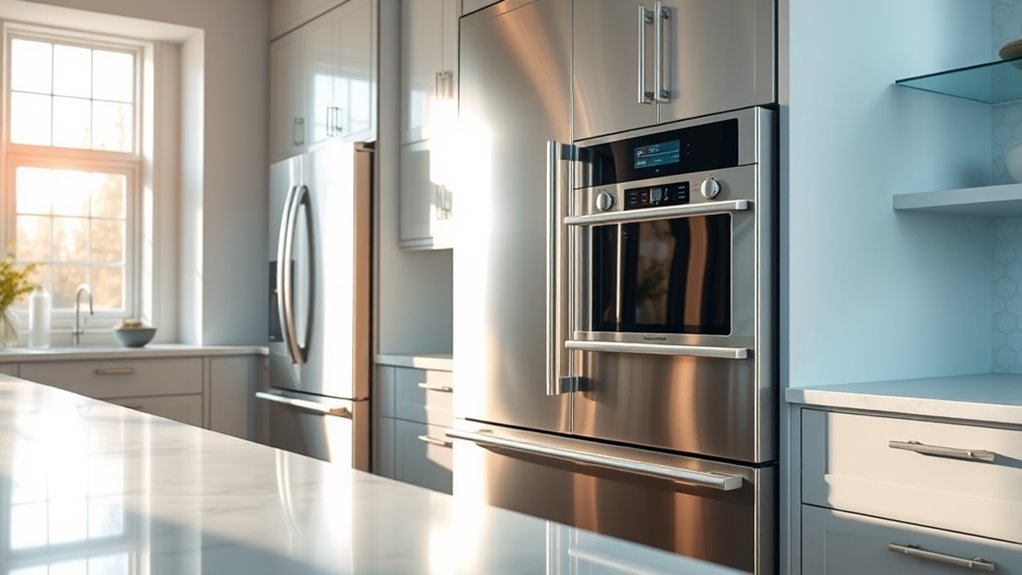
When shopping for appliances, you’ll quickly notice a flood of buzzwords that can be confusing or even misleading. Terms like “energy efficiency labels” and “smart technology features” often flood product descriptions, leaving you wondering what they really mean and how they benefit you. These labels and features are designed to help you make smarter choices, but understanding their true value is key to getting the most out of your purchase.
Energy efficiency labels are a good starting point. They’re usually displayed prominently on appliances, often with ratings or certifications like ENERGY STAR. These labels indicate how well an appliance uses electricity or other resources, helping you identify models that consume less power while delivering the same performance. An appliance with a high energy efficiency rating can save you money on utility bills over time and reduce your environmental footprint. However, it’s important to look beyond the label and compare actual energy consumption figures, as some appliances with similar ratings may perform differently in everyday use.
Smart technology features, on the other hand, are increasingly common in modern appliances. When you see terms like “Wi-Fi connectivity,” “remote control,” or “AI-driven cycles,” they refer to capabilities that allow you to control and monitor your appliances via smartphone apps or voice commands. These features can add convenience, enabling you to start a load of laundry while still at work or receive alerts when your refrigerator door is left open. While smart technology can enhance your user experience, it’s worth considering whether you’ll actually use these features regularly. Sometimes, they add to the initial cost without providing enough practical benefit.
Both energy efficiency labels and smart technology features serve as tools to help you make informed decisions, but they shouldn’t be the sole basis for your purchase. Look at the overall performance, durability, and compatibility with your lifestyle. For example, a refrigerator with a top energy efficiency label might also have smart features that let you track its internal temperature remotely. If you’re tech-savvy, that might be a selling point. Conversely, if you prefer simple, straightforward appliances, you might prioritize models without the smart extras but with excellent energy ratings.
Additionally, considering European cloud innovations can provide insight into how modern technology influences appliance development, emphasizing sustainability and connectivity. In the end, understanding these buzzwords helps you avoid being swayed by marketing hype. Instead, focus on what truly matters—saving energy, simplifying your routines, and choosing appliances that fit your needs and budget. This way, you’ll make smarter, more satisfying appliance choices that serve you well for years to come.
Top picks for "appliance buzzword decod"
Open Amazon search results for this keyword.
As an affiliate, we earn on qualifying purchases.
Frequently Asked Questions
What Exactly Qualifies an Appliance as “Professional Grade”?
You know an appliance is “professional grade” when it offers industrial durability and commercial features designed for heavy use. These appliances are built to withstand constant operation, often with higher quality materials and advanced functions. They’re typically used in professional settings but are available for home use too. If it’s tough, reliable, and packed with advanced features, it probably qualifies as “professional grade.”
Do “Professional Grade” Appliances Cost More Than Standard Ones?
Yes, professional-grade appliances usually cost more than standard ones. You’ll notice higher retail pricing because of their durable build and advanced features, which appeal to serious users. Additionally, brand reputation plays a role; trusted brands often charge a premium for their quality and reliability. While the upfront cost is higher, you might find that these appliances last longer and perform better, making them a worthwhile investment for demanding households or professional settings.
Are “Energy-Efficient” Appliances Truly Better for the Environment?
Energy-efficient appliances are better for the environment because they promote sustainable design and often incorporate renewable energy integration. By using less electricity or water, you reduce your carbon footprint and help conserve resources. Look for models with high ENERGY STAR ratings, as they’re designed to minimize environmental impact. Choosing these appliances supports eco-friendly living and encourages manufacturers to prioritize sustainable innovations in future products.
How Can I Verify Appliance Claims Before Purchasing?
To verify appliance claims before buying, start by checking product certifications like ENERGY STAR or UL listings, which guarantee safety and efficiency standards. Read user reviews to see real-world experiences and reliability insights. Compare features with trusted sources, and visit stores to inspect the appliance firsthand. Doing this helps you make informed decisions, ensuring the appliance truly meets its claims and suits your needs.
Do These Buzzwords Influence Warranty and Service Options?
Yes, buzzwords like “professional grade” can influence warranty implications and service availability. When an appliance is labeled this way, manufacturers might offer longer or more extensive warranties, expecting higher durability. Service options may also be more accessible or prioritized for these models. However, you should always verify the specific warranty terms and service policies, as they can vary regardless of the buzzwords used in marketing.
Conclusion
So next time you see “professional grade” on an appliance, remember it’s just a fancy label designed to make you think you’re getting top-tier gear. Don’t fall for the hype—your wallet and your kitchen will thank you. After all, who needs “professional” when a regular old toaster does the trick? Stay savvy, skip the buzzwords, and keep your expectations as realistic as that “luxury” dishwasher’s lifespan. Happy shopping!